Showing posts with label Toyota. Show all posts

Toyota Tundra

The Toyota Tundra is a full-size pickup truck introduced by Toyota in the year 2000. It was widely considered to be the first full-size import-brand truck built with an American look and feel and a refined V8 engine. The Tundra was eventually nominated for the North American Truck of the Year award and was Motor Trend magazine's Truck of the Year in 2000 and 2008. Currently the Tundra is assembled in San Antonio, Texas where production was consolidated in 2008. The first generation Tundra had many similarities with the older Toyota T100 and the compact Toyota Tacoma. The biggest of those similarities was the shared use of a 3.4-liter V6 engine which was the top of the line engine in both the Tacoma and T100. The V6 engine would serve as the base engine for the Tundra, while a second powerplant, a first for a Toyota truck, a V8 engine sized at 4.7-liters was added to the lineup. The Tundra was slightly larger than the T100, but still suffered the perception of being too small and carlike to pose a serious threat to the domestic pickup trucks. With a production capacity of 120,000, sales were double the rate of the T100. At the time the Tundra also had the largest initial vehicle sales for Toyota in its history. It garnered impressive honors, including Motor Trend's Truck of the Year award for 2000 and Best Full- Size Truck from Consumer Reports. Built in a new Toyota plant in Princeton, Indiana, with 65 percent domestic content, the Tundra showed that Toyota was serious about closing the gap on the "Big Three" in all major segments.Engine choices available in the Tundra were a 24V 3.4-liter V6 engine that produced 190 horsepower (140 kW) and 220 lb·ft (298 N·m) of torque and an LEV certified 32 valve 4.7-liter "i-Force" V8 engine that produced 245 horsepower (183 kW) and 315 lb·ft (427 N·m) of torque. A Toyota Racing Development (TRD) supercharger was already available for the 3.4-liter V6 (2000-2003 models) that bumped horsepower to the 260 horsepower (190 kW) range and 260 lb·ft (350 N·m) of torque. TRD introduced a second supercharger for the V8 (2000-2003 models) engine late into its second year of production that pushed the V8 numbers to the mid 300 horsepower (220 kW) range and torque to the 400 lb·ft (540 N·m) range. Although the V6 supercharger is still widely available, the V8 supercharger is rarer and harder to find because TRD stopped its production once Toyota released the updated VVT-i equipped 4.7-liter engine.


Toyota Tundra Limited 4x4--Chicago Cars Direct HD


A larger Tundra was introduced at the 2006 Chicago Auto Show. It had lifted cues of its smaller brother the Toyota Tacoma along with some cues from the Toyota FTX concept truck. The truck had many enhancements, such as a towing capacity of up to 10,000+ lb, a payload capacity of over 2,000 lb (910 kg), a new 5.7-liter 3UR-FE V8 engine mated to a new 6-speed automatic transmission. The second generation Tundra has 3 engines available. The new 5.7-liter V8 that produces 381 horsepower (284 kW) and 401 pound-feet (544 N·m) of torque, and the carry over 4.7-liter 2UZ-FE V8 rated at 276 horsepower (206 kW) and 313 pound-feet (424 N·m) of torque, as well as the previous 4.0-liter 1GR-FE V6 rated at 236 horsepower (176 kW) and 266 pound-feet (361 N·m) of torque. Toyota made the new Tundra useful for many construction workers, by including extra large door handles, deck rail system, integrated tow hitch, and headrests that can fit a worker with his hard hat on. The Tundra also includes as standard: an electronic automatic limited slip differential (Auto LSD), Vehicle Stability Control, traction control, electronic brakeforce distribution, brake assist, anti-lock brakes and tailgate assist. However, its high starting MSRP of $22,390 makes it more expensive than the Chevy Silverado Work Truck (MSRP $17,860) and the base Ford F-150 (MSRP $17,345). Some other changes Toyota included in the new Tundra are optional tow mirrors, a 26.4 US gal (100 L; 22 imp gal) fuel tank, available 22-inch (560 mm) alloy wheels, backup camera, Bluetooth, large center console (big enough to fit a 15-inch (380 mm) laptop), extra-large disc brakes and calipers, and the aforementioned 6-speed sequential automatic transmission. All 5.7-liter Tundras come equipped with a tow package which includes engine oil and transmission coolers, integrated trailer hitch, 4.30:1 axle ratio, and large braking hardware for increased fade resistance.


The Tundra comes equipped with dual front airbags, front row side torso airbags, and rollover sensing side curtain airbags for both the front and rear rows. Vehicle Stability Control, traction control, anti-lock brakes, brake assist, and electronic brakeforce distribution are also standard. For the 2010 model year, a driver and front passenger knee airbag becomes standard. Toyota's Tundra was the first full-size pickup to have earned the IIHS's Top Safety Pick accolade, followed by the redesigned 2009 Ford F-150. In tests conducted by the IIHS, the Tundra received an overall "Good" score in the frontal offset crash test, the highest possible rating in the side impact crash test, and the maximum score for rear crash protection. During September 2007 Toyota Motor Corporation announced plans to add a diesel variant of the Tundra. This was again confirmed in January at the 2008 North American International Auto Show. There Toyota President Watanabe stated, "I am happy to confirm that a new clean-diesel V8 engine will be offered in both the Tundra and the Sequoia in the near future." But later in 2008 at the State Fair of Texas a Toyota official stated the Tundra diesel is on hold due to poorer than expected sales. Motor Trend and Car and Driver, have earlier reported Toyota will produce a heavy-duty version of the Tundra designed to compete in the 3/4-ton class. At the 2007 SEMA auto show, Toyota showcased its Tundra Diesel Dually Project Truck. This heavy-duty Tundra Diesel is based on a heavily modified Tundra Crew Max chassis. It features 8.0L Hino diesel engine, Eaton manual transmission, along with an extensive list of other modifications. High-resolution images are available in autoblog's gallery. During late-2006 Toyota purchased a stake of Isuzu from General Motors. The Duramax V8 engine design currently powers GM's 3/4 ton and 1-ton pickups, but GM's 1/2 ton diesel will be completely designed and built solely by General Motors. The Australian and European version of the Toyota Land Cruiser features a 4.5L diesel which a future Tundra Diesel could be based on. Toyota President Katsuaki Watanabe has stated that he would like to develop a hybrid electric version of the Tundra. However, Toyota faces several technical challenges that it must overcome before it could bring such a vehicle to market. According to the Japanese newspaper Nihon Keizai Shimbun, Toyota is considering developing a gasoline electric hybrid Tundra, for sale in North America around 2010. Toyota may also introduce a diesel electric hybrid system for the Tundra. In Japan, the Toyota Dyna and Hino Dutro light trucks produced by the Toyota Motor use diesel electric hybrid systems. The Hino Ranger a medium to heavy duty cab-over truck could also provide hybrid technology for the next generation Tundra. At the 2008 North American International Auto Show, Toyota USA President Jim Lentz stated "different models require different types of fuel saving technology...there may be a few where hybrid technology doesn’t make sense". He further went on to say that the Tundra and the new Sequoia will not be offered with a hybrid engine in the near future, instead those vehicles would feature "clean, fuel efficient diesel engines. For now, it seems, the Tundra Hybrid has been sent back to the drawing board or cancelled entirely.

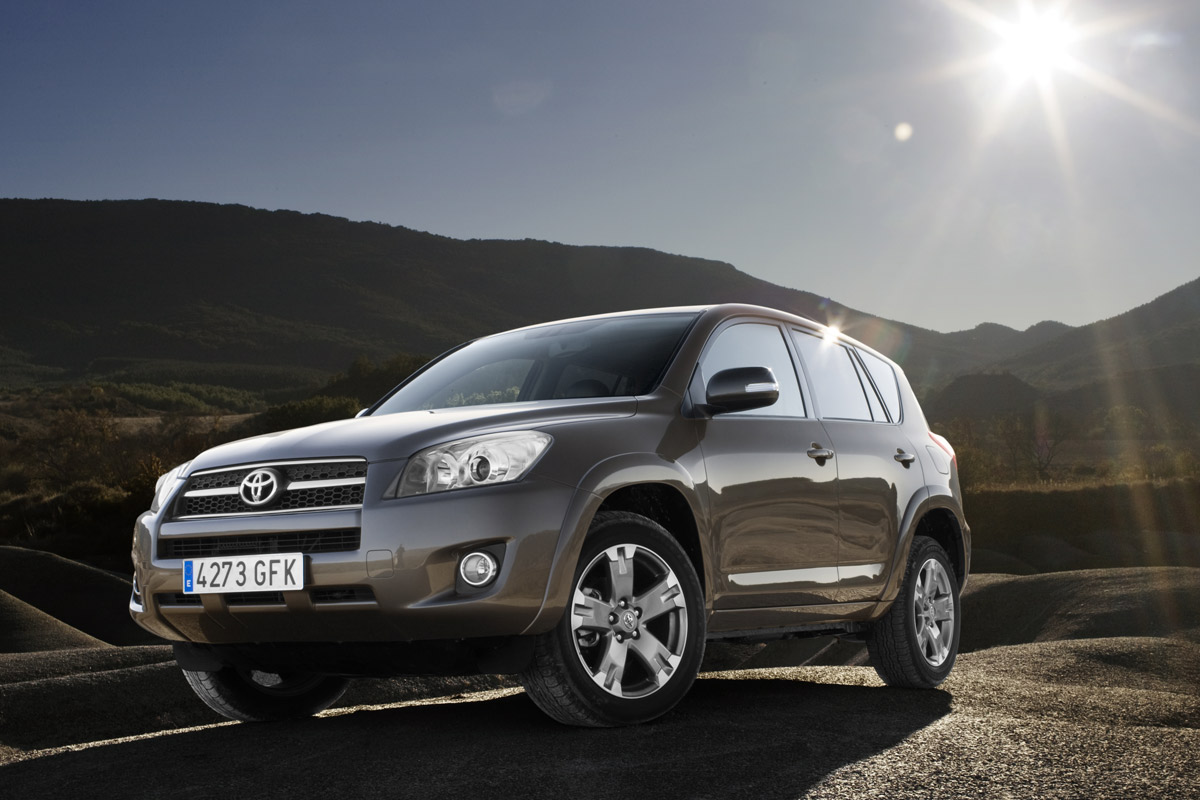
Toyota RAV4

The Toyota RAV4 is a compact crossover SUV from Toyota. It was the first compact crossover SUV, introduced in Japan and Europe in 1994 and beginning sales in North America in 1996. The vehicle was designed for consumers wanting a vehicle that had most of the benefits of SUVs, such as increased cargo room, higher visibility, and the option of full-time four-wheel drive, along with the maneuverability and better fuel economy of a smaller car. Its name stands for "Recreational Active Vehicle with 4-wheel drive", although not all RAV4s have four wheel drive, which is optional in some countries. The early success of the RAV4 paved the way for other compact SUVs such as the Ford Escape and the Subaru Forester. In most countries, the RAV4 is the only compact SUV from Toyota. In other markets, it is the crossover counterpart of the FJ Cruiser. Since the 2006 third generation model, Toyota has offered both short- and long-wheelbase versions of the RAV4. Short-wheelbase versions are retailed in Japan and Europe, with Australia and North America receiving the long-wheelbase versions. Toyota in Japan also sells the longer version as the Toyota Vanguard.

Attractive Toyota RAV4

The RAV4 was originally based on the Corolla platform,[citation needed] and was offered in both two and four-door versions. In the US, a 2.0 litre straight-4 producing 120 hp (89 kW) was offered. Both front wheel drive and all-wheel drive were available, and the RAV4 could be had with either a five-speed manual or four-speed automatic transmission. In 1998, the RAV4 was slightly restyled on the front and rear fascias, and a soft-top two-door was made available. Power was increased slightly to 127 hp (95 kW). In 1999, the two-door hardtop was dropped from the American lineup, leaving the 4-door and soft-top models.

Strong Toyota RAV4 In Blue Color

The second generation RAV4 went on sale in the middle of 2000, and came in base Edge and upmarket Cruiser models (model designations may vary according to market), in both 3- and 5-door configurations. The main differentiation between the two models was in appearance. Edge models came with unpainted grey bumpers and side cladding, mirrors, and door handles, and featured steel rims. Cruiser models gained body-coloured (painted) bumpers and moldings, mirrors, and door handles, alloy wheels, and ABS brakes. All models came equipped with a brand-new 2.0 litre 4-cylinder engine featuring VVT (variable valve timing), resulting in improved power and torque, as well as fuel consumption. Permanent all-wheel-drive was a feature. Options were ABS brakes (on the Edge), and air conditioning (on all models).

The third generation RAV4 is offered in two versions: a short- or a long-wheelbase model. The short-wheelbase model is sold only in Japan and Europe, with the long-wheelbase RAV4 sold in Australia and North America. Since 2007, the extended-length RAV4 is also sold alongside its shorter counterpart in Japan as the Toyota Vanguard, albeit with a revised front-end body work incorporating a revised grille, bumper, bonnet and headlamps.

Toyota RAV4 Interior Concept

Toyota RAV4 Steering Wheels

The vehicles were built in Toyota's Tahara, Aichi assembly plant, and under contract by Toyota Industries in its Nagakusa, Obu, Aichi plant. Beginning in November 2008, the North American vehicles were built in the Toyota Motor Manufacturing Canada Inc. Second Plant. Beginning in March 2009, Chinese models began production in by Tianjin FAW Toyota Motor Co. Ltd.‎ in a joint-venture plant in Tianjin, China.

New 2011 Toyota Matrix

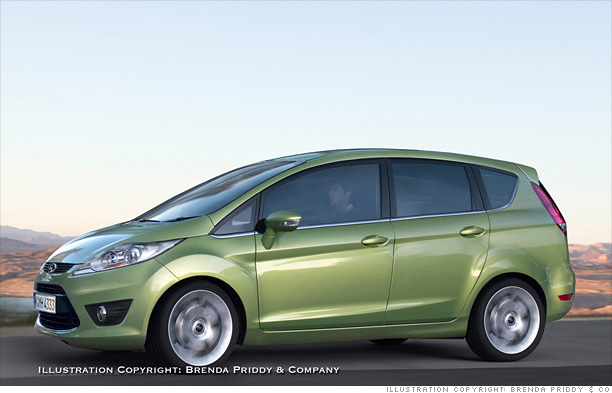
Toyota has launched their new 2011 Toyota Matrix.New model of Toyota include some advanced features and technologies.Toyota relieved full specifications of 2011 Toyota Matrix and that contains 2011 Toyota Matrix features and 2011 Toyota Matrix overviews.You will have to get a full and detailed structure of 2011 Toyota Matrix from here.Some rare and high quality wallpapers of the 2011 Toyota Matrix has been included here.

Newest Toyota Matrix Model For 2011

On the outside, the subtle refresh is limited to all-new front and rear bumpers with integrated front and rear underbody spoilers and a large mesh front fog lamp bezel. The newly designed 16-inch steel wheels and 17-inch, five-spoke alloy rims plus the introduction of a new Spruce Mica color round off the changes.

2011 Toyota Matrix On The Road

2011 Toyota Matrix is attainable in two versions: base Matrix and the sporty S grade. Powertrain selection conatain 1.8- and 2.4-liter four-cylinder engines, a five-speed manual transmission, and either four- or five-speed automatic transmissions. All-wheel drive (AWD) with active torque control is available in the Toyota Matrix S, teamed to the 2.4-liter engine.

2011 Toyota Matrix Interior View

The 2011 Toyota Matrix has everything to forward you top most comfort while having an easy ride. Engine of this 2011 Toyota Matrix has a strong horse power while soundless starting. This 2011 Toyota Matrix is really easy to drive and control in a rough and scattered road.

The Matrix grade is provided with a 1.8-liter DOHC four-cylinder engine, which devolopes 132 hp at 6,000 rpm and 128 lb.-ft. of torque at 4,400 rpm. Dual Variable Valve Timing with intelligence (VVT-i) controls valve timing on both the taking in and exhaust camshafts to help make optimal performance and economy. The 1.8-liter engine is paired with a five-speed manual transmission or a four-speed Electronically Controlled automatic Transmission (ECT).
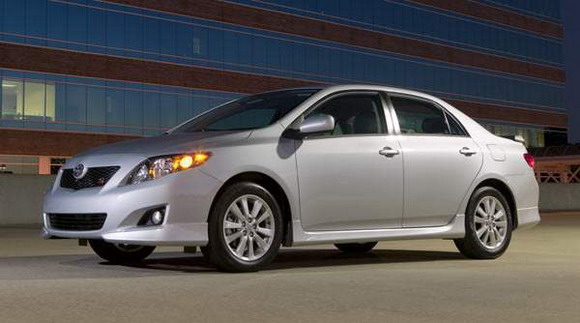
Toyota Sienna

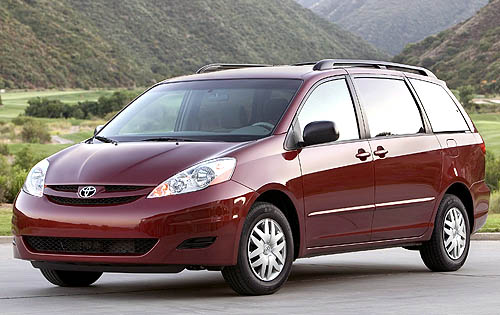
The Toyota Sienna is a family minivan currently manufactured by Toyota at Toyota Motor Manufacturing Indiana in Princeton, Indiana, United States for the North American market. It replaced the first-generation Previa van in 1997 with a more conventional front wheel drive layout and shares a heavily revised platform with the Camry. Both the Previa and original Sienna were smaller than the other minivans they competed against, but a redesign in 2004 increased the dimensions to match those of its competitors. The Sienna is currently the only minivan in its class to offer all-wheel-drive. It was redesigned a second time for the 2011 model year. The third generation Sienna was put on sale in the US in February 2010 and is the first Sienna to ever receive a "Top Safety Pick" award from the Insurance Institute for Highway Safety.In late 1997, Toyota launched the front wheel drive MY 1998 Sienna in the North American market as a replacement for the mid-engined Previa. The Sienna debuted with a 3.0-liter 1MZ-FE V6 engine rated at 145 kW and 284 N·m (209 lb·ft) of torque. Built on an extended platform of the Camry, the Sienna was appropriately marketed as the "Camry of minivans," capitalizing on the Toyota Camry's popularity and reputation. It came in three trim levels, CE, LE, and XLE. The LE and XLE models were equipped with 2nd row captain's chairs while the CE models came equipped with a 2nd row 2-passenger bench seat. The driver side sliding door and roof rack were standard on the LE and XLE models, but were optional on the CE models. The XLE models offered leather seats and a wood trim package. The Sienna also touted best-in-class fuel economy of 16 city/22 highway miles per gallon. It was built in Georgetown, Kentucky. A year after its release, the Sienna faced new competition from Honda's redesigned Odyssey minivan, which was larger and offered a V6 like the Sienna.For the 2001 model year, the Sienna underwent a mid-cycle refresh. This update included a facelift to both front and rear fascias which added a redesigned front grille and bumper along with revised rear taillights sporting a more modern appearance (clear-lens turn-signals as opposed to amber-coloured). Toyota also revamped the center console area to add more usability to the HVAC controls along with new locations for the accessory switches (rear vent, power sliding doors, heated seats). The engine also came equipped with a variable valve timing feature VVT-i boosting output to 210 hp (157 kW) and 220 lb·ft (298 N·m) torque. The driver side sliding door became standard on all models, although the roof rack remained optional on the CE models.

Luxury Red Toyota Sienna

In January 2004, the second-generation Sienna was unveiled at the Detroit Auto Show. Production shifted to Princeton, Indiana, and the former Georgetown plant was retooled to build the second generation Camry Solara. To make the redesign more successful, Toyota assigned Yuji Yokoya as chief engineer on the new Sienna project. Yokoya and his family drove the previous Sienna over 53,000 miles (85,000 km) throughout North America to find weaknesses from the previous model. The new redesign continued to offer the CE, LE, and XLE trims along with a new, more luxurious, leather-trimmed XLE Limited model. The most distinguishable difference on the XLE Limited model is the horizontal chrome bar placed above the rear license plate. All Siennas were now powered by an updated ULEV certified 3.3-liter 3MZ-FE V6 engine paired with a new 5-speed automatic transmission. The gear-shift lever was also moved from the steering column to the lower-center center console area, and moved in a zig-zag pattern similar to the Lexus RX. New styling allowed for a coefficient of drag figure of 0.30 Cd. Fuel economy was rated at 17 city/25 highway (16 city/22 highway for AWD) under revised EPA estimates. The Sienna comes standard with anti-lock braking, brake assist, electronic brakeforce distribution, traction control and a tire-pressure monitor. Side torso airbags, and side curtain airbags were standard on certain 2004 and 2005 model trims while optional on others, but became standard on all 2006 trims. Vehicle Stability Control initially optional on lower trims became standard for 2008 models. The IIHS gives the Sienna an overall "Good" score in their frontal offset crash test with "Good" marks in all six measured categories. All 2006 models and later receive a "Good" overall score, while pre-2006 models without side airbags receive an "Acceptable" score for side impacts.

Toyota Sienna Newest Interior Design

Toyota Sienna Dashboard View

The redesigned MY 2011 Sienna premiered at the Los Angeles Auto Show in early December 2009. It was designed at Calty studios and engineered at Toyota Technical Center in Ann Arbor, Michigan. The new Sienna arrived at dealers in February 2010. The Sienna will be offered in five trim levels, the Sienna grade, LE, XLE, Limited and for the first time the SE trim. The new SE offers revised bodywork, "Altezza" style clear tail lamps, 19-inch wheels, firmer suspension and revised steering tuning for a sportier ride. All-wheel-drive is only available with the V6 engine on the LE, XLE and Limited model trims. The previous 3.5-liter 2GR-FE continues, but for the first time the Sienna offers a four cylinder, the 1AR-FE. An Electric Power Steering (EPS) system replaces the previous hydraulic power steering system. Toyota expects EPA-estimated mileage figures of 19 mpg city/24 mpg highway for models powered by the 4-cylinder engine, 18 mpg city/24 mpg highway for 2WD V6 models ,and 16 mpg city/22 mpg highway for AWD models. An optional tow package for V6 models is rated to tow 3,500 pounds (1,600 kg). New features include an optional sliding second row with "Lounge Seating" recliner style chairs, a feature previously seen on the Lexus LS, and Toyota's keyless Smart Key System with push-button start. The rear seat entertainment option now uses a 16.4-inch LCD screen which operates in two view modes, a single 16:9-ratio widescreen or two separate 4:3-ratio split screens with separate wireless headphones. For safety the back-up camera comes with a new 180º panoramic view. Other new options include a Pre-Collision System (PCS) as well as an automatic highbeam dimmer, Safety Connect and a more advanced stability control system known as Vehicle Integrated Dynamics Management. A driver's knee airbag is now standard as well.Toyota is the first automaker to offer a factory installed auto-access seat for disabled people. The one-touch rotating, power ascending/descending lift-up seat can lower to within 19 inches of the ground.

Toyota Prius

Prius is a Latin word meaning "to go before". According to Toyota, the name was chosen because the Prius was launched before environmental awareness became a mainstream social issue. In February 2011, Toyota asked the public to decide on what the most proper plural form of Prius should be, with choices including Prien, Prii, Prium, Prius, or Priuses. The company says "it will use the most popular choice in its advertising" and on February 20 announced that "Prii" was the most popular choice, and the new official plural designation. In 1995, Toyota debuted a hybrid concept car at the Tokyo Motor Show, with testing following a year later. The first Prius, model NHW10, went on sale on December 10, 1997. It was available only in Japan, though it has been imported privately to at least the United Kingdom, Australia, and New Zealand. The first generation Prius, at its launch, became the world's first mass-produced gasoline-electric hybrid car. The NHW10 Prius styling originated from California designers, who were selected over competing designs from other Toyota design studios. In the United States, the NHW11 was the first Prius to be sold. The Prius was marketed between the smaller Echo and the larger Corolla. The published retail price of the car was US$19,995. The NHW11 Prius became more powerful partly to satisfy the higher speeds and longer distances that Americans drive. Air conditioning and electric power steering were standard equipment. The vehicle was the second mass-produced hybrid on the American market, after the two-seat Honda Insight. While the larger Prius could seat five, its battery pack restricted cargo space. The California Air Resources Board (CARB) classified the car as a Ultra Low Emission Vehicle (ULEV). Prius owners were eligible for up to a US$2,000 tax credit from their gross income. In contrast with the NW10, Toyota executives claimed that the company broke even financially on sales of the NHW11 Prius. European sales began in September 2000. The official launch of the Prius in Australia occurred at the October 2001 Sydney Motor Show, although sales were slow until the NHW20 model arrived.

New Toyota Prius Design

In 2004 the Prius was completely redesigned as a mid-size liftback, sized between the Corolla and the Camry, with redistributed mechanical and interior space significantly increasing rear-seat legroom and luggage room. The 2004 Prius is even more environmentally friendly than the 2001 model (according to the EPA), and is 6 inches (150 mm) longer than the previous version. Its more aerodynamic Kammback body balances length and wind resistance, resulting in a drag coefficient ( Cd) of 0.26. The development effort, led by chief engineer Shigeyuki Hori, led to 530 patents for the vehicle. Toyota debuted the new Prius (2010 US model year) at the January 2009 North American International Auto Show, and sales began in Japan on May 18, 2009. Toyota cut the price of the Prius from ¥2.331 million to ¥2.05 million to better compete with the Honda Insight, leading some to wonder whether increased sales of the Prius might come at the expense of sales of other vehicles with higher margins. Competition from lower priced hybrids, such as the Honda Insight, also made it difficult for Toyota to capitalize on the Prius's success. Its new body design is more aerodynamic, with the coefficient of drag reduced to 0.25 Cd. An underbody rear fin helps stabilize the vehicle at higher speeds. The estimated fuel-efficiency rating, using the U.S. EPA combined cycle, is 50 mpg-US (4.7 L/100 km; 60 mpg-imp). The Prius was the most efficient car powered by liquid fuel available in the U.S. in 2009, based on the official rating. Only the first-generation Honda Insight (2000–2006) equipped with a manual transmission attained a lower fuel consumption rate. The official UK fuel efficiency data for the Prius T3 is Urban 72.4 mpg-imp (3.90 L/100 km; 60.3 mpg-US), Extra Urban 76.4 mpg-imp (3.70 L/100 km; 63.6 mpg-US), Combined 72.4 mpg-imp (3.90 L/100 km; 60.3 mpg-US). The 1.8-liter gasoline engine (previously 1.5 liters) generates 98 hp, and with the added power of the electric motor generates a total of 134 hp (previously 110 hp). The larger engine displacement allows for increased torque, reducing engine speeds (RPM), which improves fuel economy at highway speeds. Thanks to its electric water pump, the Prius engine is the first consumer automotive production engine that requires no accessory belts, which also further improves its fuel economy. The electric motors and other components of the hybrid powertrain are also smaller and more efficient than the industry average. Toyota estimates the new inverter, motor and transaxle are 20 percent lighter. Disc brakes replace the previous rear drum brakes. In constructing the Prius, Toyota used a new range of plant-derived ecological bioplastics, made out of cellulose derived from wood or grass instead of petroleum. The two principal crops used are kenaf and ramie. Kenaf is a member of the hibiscus family, a relative to cotton and okra; ramie, commonly known as China grass, is one of the strongest natural fibres, with a density and absorbency comparable to flax. Toyota says this is a particularly timely breakthrough for plant-based eco-plastics because 2009 is the United Nations’ International Year of Natural Fibres, which spotlights kenaf and ramie among others.

Toyota Prius Exotic Exterior

The Prius Plug-in Hybrid is a demonstrator plug-in hybrid vehicle (PHEV) based on a third generation Toyota Prius (model ZVW30) outfitted with 5.2 kWh lithium-ion batteries, with an all-electric range of 13 mi (21 km). A global demonstration program involving 600 pre-production test cars began in late 2009 and is taking place in Japan, Europe, Canada, China, Australia, New Zealand and the United States. The Prius Plug-in is scheduled for retail sales in the United States in the second quarter of 2012 and will be initially offered only in 15 states. According to Toyota these are the states where nearly 60 percent of all Prius models are currently sold. The Prius Plug-in will be available in all remaining states one year later. In April 2011 Toyota opned its priority registration website for customers interested in ordering the 2012 Prius Plug-in Hybrid, even though the purchase price has not been announced. At the January 2011 North American International Auto Show, Toyota revealed the 2012 model year Prius v, an extended hatchback wagon, which features over 50 percent more interior cargo space than the original Prius design. Toyota also unveiled the Prius c concept, which in production form is expected to be cheaper and smaller than the current Prius hatchback. Toyota expects the Prius v to go on sale in mid- to late 2011, and a car based on the Prius c concept to enter production in the first half of 2012. Toyota plans to offer the U.S. Prius v version with a nickel-metal hydride battery pack similar to the 2010 model year Prius, and with two rows of seats to accommodate five passengers. The European and Japanese versions will be offered with a lithium-ion battery, with three rows of seats with accommodations for seven passengers. In the Japanese market the nickel-metal hydride version is expected to sell for¥2.35 million (US$28,400), and the lithium-ion version for ¥3 million yen (US$36,300). In May 2011 Toyota introduced the Prius Alpha in Japan, which is derived from the third-generation Prius. The Alpha is the basis for the five-seat Prius v planned for launch in North America, and the seven-seat Prius + planned for launch in Europe. The Prius Alpah is available in a five-seat, two-row model and a seven-seat, three-row model, the latter’s third row enabled by a space-saving lithium-ion drive battery in the center console. The five-seat model uses a NiMH battery pack. Deliveries of the Alpha will be delayed due to the effects of the 2011 earthquake and tsunami on production. Toyota announced it had received 25,000 orders for the Prius Alpha hybrid wagon and minivan models in Japan before the start of sales.

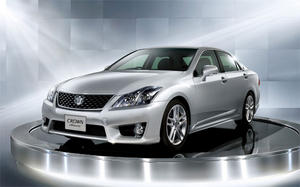
2011 Toyota Crown

The Crown has evolved into a line of full-size luxury sedans by Toyota. The range was primarily available in Japan and some other Asian countries, originally designed to serve as a taxi. It was in later years sold in the United States during the late 1950s and up until 1971. The Crown is Toyota's oldest sedan still in production. It is outranked only by the Century and the Majesta in social status. The Crown is used by many Japanese companies as the company Limousine. Exports to Europe began in 1964 with the first cars going to Finland. Other European countries which saw imports of the Crown included the Netherlands and Belgium. The United Kingdom was another market until the early 1980s. It was also exported to Canada for a few years—1965–68. In many markets the Crown had become very expensive and was replaced by the Cressida when that model became available for export in the early 1980s.

Elegant 2011 Toyota Crown

Luxury 2011 Toyota Crown

Inside Of 2011 Toyota Crown

The new Crown is available in 5 different trim levels: the basic Crown Sedan; the Crown Royal series which is a more comfortable and luxurious car; the Crown Athlete series which takes the luxurious aspect of the Royal series but has more aggressive styling and sporty features; the Crown Majesta series which is larger and has more luxurious features than the Royal series; and the Crown Hybrid series which is a trim level designated for the hybrid V6 drivetrain. The Crown is one of the first vehicles to have a 3 Dimensional Satellite Navigation System coupled with G-BOOK and boasts many features that have not been developed by other luxury car makers.

2011 Toyota Crown Rare Seats

2011 Toyota Crown Modification

2011 Toyota Crown Machine

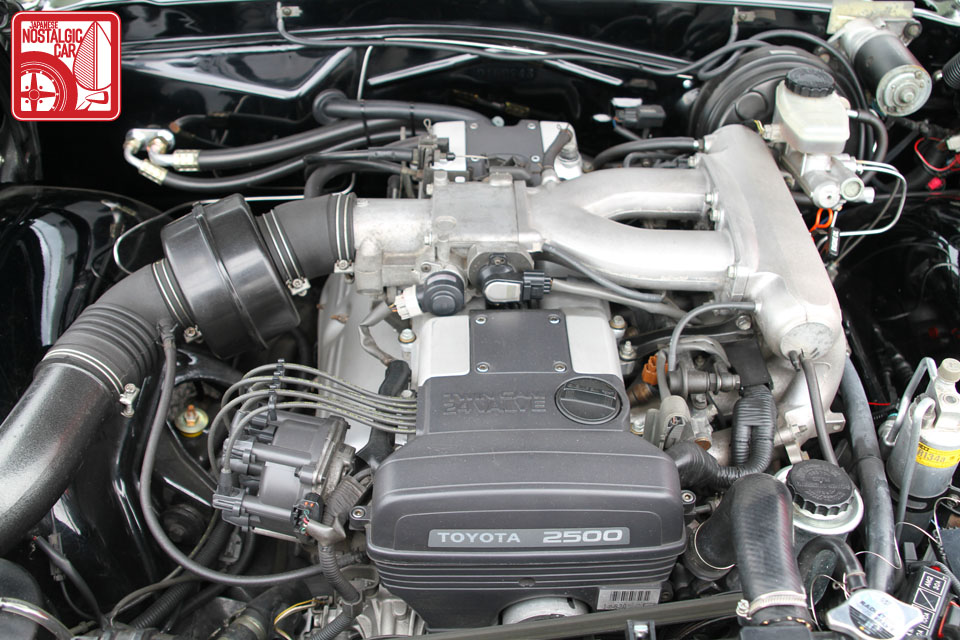
The Crown hybrid concept was exhibited at 2007 Tokyo Motor Show. In television commercials in Japan a song was written by composer John Harle titled "How should I my true love know?" The Crown is also manufactured by the Tianjin FAW Toyota Motor Co. Ltd. in Tianjin, China. Three petrol engines are available: the 2.5 L 4GR, the 3.0 L 3GR and the 4.3 L 3UZ. This is the first generation which does not offer a station wagon version. It is not known whether such a version will be available.

Toyota Corolla

The Toyota Corolla is a line of subcompact/compact cars manufactured by the Japanese automaker Toyota, which has become very popular throughout the world since the nameplate was first introduced in 1966. In 1997, the Corolla became the best selling nameplate in the world, with over 35 million sold as of 2007. Over the past 40 years, one Corolla car has been sold on average every 40 seconds. The series has undergone several major redesigns. The name Corolla is part of Toyota's naming tradition of using the name Crown for primary models: the Corona, for example, gets its name from the Latin for crown; Corolla is Latin for small crown; and Camry is an Anglicized pronunciation of the Japanese for crown, kanmuri. Corollas are manufactured in Japan and in Brazil (Indaiatuba, São Paulo), Canada (Cambridge, Ontario), China (Tianjin), India (Bangalore), Indonesia, Malaysia, Pakistan, Philippines, South Africa, Taiwan, Thailand, Turkey, the United Kingdom (Derbyshire) and Venezuela. Production has previously been made in Australia (Victoria). Production in the United States (Fremont, California) ended in March 2010. The Corolla's chassis designation code is "E", as described in Toyota's chassis and engine codes. A slightly upmarket version called the Sprinter was sold in the Japanese home market. It was replaced in 2001 by the Allex, which was then replaced by the Blade in 2009. There have also been several models over the years, including the Corolla Ceres (and similar Sprinter Marino) hardtop, Corolla Levin and Sprinter Trueno sports coupés and hatchbacks, and the Corolla FX hatchback, which became the Corolla RunX, while the Sprinter became the Allex with the introduction of the ZZE128 Corolla. The RunX and Allex was replaced by the Auris in 2006 (known only as Corolla in markets outside of Japan). A compact MPV named the Corolla Verso has also been released in European markets. Its Japanese counterpart is the Corolla Spacio, which has been discontinued as of the 10th generation. The Corolla Rumion is also sold in the US-market as the Scion xB. The Corolla Matrix, better known just as the Matrix, shares the E120 and E140 platforms, and is considered the hatchback/sport wagon counterpart of the North American Corolla sedan, as the European/Australasian Corolla hatchback is not sold there. Toyota frequently combines the sales figures of the Corolla sedan and Matrix. The Pontiac Vibe, which is the General Motors badged version of the Matrix, also shares the Corolla platform. The Pontiac Vibe was exported from Fremont, California to the Japanese market where it was badged Toyota Voltz. Over the years, there have been rebadged versions of the Corolla, sold by General Motors, including the 1980s' Holden Nova of Australia, and the Sprinter-based Chevrolet Nova, Chevrolet Prizm, and Geo Prizm (in the United States). The Corolla liftback (TE72) of Toyota Australia was badged as simply the T-18. The five-door liftback was sold with the Corolla Seca name in Australia and the nameplate survived on successive five-door models. The Daihatsu Charmant was produced with the E30 through E70 series. The Tercel was a front wheel drive car, first introduced in 1980 and was called the Corolla Tercel then, and later given its own name in 1984. The Tercel chassis was also used for the Corolla II hatchback in 1992.


In May 1970, the E20 was restyled with a more rounded body and the 1400 cc T and 1600 cc 2T OHV engines were added to the range. The now mutually exclusive Corolla and Sprinter names were used to differentiate between two slightly different treatments of sheet metal and trim. The Corolla Levin and Sprinter Trueno names were introduced as the twincam version of the Corolla and Sprinter respectively.April 1974 brought rounder, bigger and heavier Corollas and Sprinters. The range was rounded out with the addition of a 2 door liftback. The Corollas were given E30 codes while the Sprinters were given E40 codes. A facelift in March 1976 saw most Corolla E30 models replaced by equivalent E50 models and most Sprinter E40 models were replaced by equivalent E60 models.A major restyle in March 1979 brought a square edged design. The Corollas had a simpler treatment of the grill, head lights and tail lights while the Sprinter used a slightly more complex, sculptured treatment. The new A series engines were added to the range as a running change. This was the last model to use the K "hicam" and T series engines. A sloping front bonnet and a contemporary sharp-edged, no-frills style was brought in during May 1983. The new 1839 cc 1C diesel engine was added to the range with the E80 Series. From 1985, re-badged E80 Corollas were sold in the U.S. as the fifth generation Chevrolet Nova. Most models now used the front wheel drive layout except the AE85 and AE86, which were to be the last Corollas offered in the rear wheel drive or FR layout. The AE85 and AE86 chassis codes were also used for the Sprinter (including the Sprinter Trueno). The Sprinter was nearly identical to the Corolla, differing only by minor body styling changes such as pop-up headlights. A somewhat more rounded and aerodynamic style was used for the E90 introduced in May 1987. Overall this generation has a more refined feel than older Corollas and other older subcompacts. Most models were now front wheel drive, along with a few 4WD All-Trac models. Many engines were used on a wide array of trim levels and models, ranging from the 1.3 liter 2E to the 165 horsepower (123 kW) supercharged 4A-GZE. The E90 Corolla was also rebadged and sold as the Geo Prizm (US) or Holden Nova (Australia).


In June 1991 Corollas received a redesign to be larger, heavier, and have the completely rounded, aerodynamic shape of the 1990s. The Corolla was now in the compact class, rather than subcompact, and the coupe still available known as Corolla Levin AE101. Refinement reached new levels, as development chief Dr. Akihiko Saito strove to create a "mini-Lexus"May 1995 saw a complete redesign for the Corolla. External differences from the E100 series were obvious. Evolutionary technological improvements continued, however, and in 1998, for the first time, some non-Japanese Corollas received the new 1ZZ-FE engine. The new engine was the first in a Toyota to have an aluminum engine block and aluminum cylinder heads, which made this generation lighter than the E100 Corolla. The model range began to change as Toyota decided styling differences would improve sales in different markets. This generation was delayed in North America until mid 1997 (US 1998 model year), where it had unique front and rear styling. Europe and Australasia received versions of their own as well.In November 2000 the ninth generation Corolla was introduced in Japan, with edgier styling and more technology to bring the nameplate into the 21st century. It is also called the Corolla Altis in the ASEAN region. The station wagon model is called the (Japanese: Corolla Fielder) in Japan. The North American release was delayed until March 2002 (2003 MY). The tenth generation of the Corolla was introduced in October 2006. Japanese markets called it the Corolla Axio, with the ASEAN markets retaining the Altis branding. The station wagon retains the Corolla Fielder name. The Corolla Altis and Corolla Axio have a different appearance. The North American release was delayed until January 2008 (2009 MY). In Australia, Corolla models built between 1986-2006 were assessed in the Used Car Safety Ratings 2008:
* (1986–1988) — worse than average
* (1989–1993) — average
* (1994–1997) — better than average
* (1998–2001) — better than average
* (2002–2006) — better than average

The US Insurance Institute for Highway Safety rated the 1998-2002 models as "Acceptable" in their 40 mph (64 km/h) frontal offset crash test. Initial 2003 models had an overall "Good" rating, but received a "Marginal" on left foot injury protection. A rebuild beginning December 2002, which continues through to the 2008 model, gives the Corolla a "Good" rating in all aspects of the test. Corolla models from model year 2005 to 2008 with optional side curtain air bags received an "Acceptable" rating in the side impact crash test, largely due to a "Marginal" rating in structure/safety cage design. Otherwise, injury protection ratings for driver and rear passenger were all good except for driver pelvis/leg injury protection, which was "Acceptable". The Corolla from model year 2009 to present with standard side curtain air bags received a "Good" rating in both the frontal offset and side impact crash test. Euro NCAP ratings are as follows:
* 1998 (EE110 1.3 5-door liftback LHD): 3 stars (23 points) adult occupant, 2 stars (15 points) pedestrian (pre-2002 rating system)
* 2002 (ZZE120 1.4 5-door hatchback RHD): 4 stars (28 points) adult occupant, 2 stars (11 points) pedestrian
* 2007 (E150 4-door sedan): 5 stars (34 points) adult occupant, 4 stars (39 points) child occupant, 3 stars (23 points) pedestrian

2011 Toyota Corolla


The Toyota Corolla is a line of subcompact/compact cars manufactured by the Japanese automaker Toyota, which has become very popular throughout the world since the nameplate was first introduced in 1966. In 1997, the Corolla became the best selling nameplate in the world, with over 35 million sold as of 2007. Over the past 40 years, one Corolla car has been sold on average every 40 seconds. The series has undergone several major redesigns.

The name Corolla is part of Toyota's naming tradition of using the name Crown for primary models: the Corona, for example, gets its name from the Latin for crown; Corolla is Latin for small crown; and Camry is an Anglicized pronunciation of the Japanese for crown, kanmuri.

Corollas are manufactured in Japan and in Brazil (Indaiatuba, São Paulo), Canada (Cambridge, Ontario), China (Tianjin), India (Bangalore), Indonesia, Malaysia, Pakistan, Philippines, South Africa, Taiwan, Thailand, Turkey, the United Kingdom (Derbyshire) and Venezuela. Production has previously been made in Australia (Victoria). Production in the United States (Fremont, California) ended in March 2010.

The Corolla's chassis designation code is "E", as described in Toyota's chassis and engine codes.

Elegant 2011 Toyota Corolla

2011 Toyota Corolla C0ncept

2011 Toyota Corolla Hatchback

2011 Toyota Corolla Audio System

2011 Toyota Corolla Luxury Interior

2011 Toyota Corolla Front Seat

2011 Toyota Corolla Machine
Related Posts Plugin for WordPress, Blogger...