Seat Leon Review
 Sporty Seat Leon
 Powerful Seat Leon
 Elegant Seat Leon
 Yellow Seat Leon
 Luxury Seat Leon
 Seat Leon Modification
 Exotic Seat Leon
 Active Seat Leon
 Seat Leon InsideSporty Seat LeonPowerful Seat LeonElegant Seat LeonYellow Seat LeonLuxury Seat LeonSeat Leon ModificationExotic Seat LeonActive Seat LeonSeat Leon Inside
 The Ford Mondeo is a large family car sold by the Ford Motor Company in various markets throughout the world. The name "Mondeo" derives from the Latin word mundus, meaning "world". The initial generation of the Mondeo was developed as a "world car", along with North American models marketed as the Ford Contour and Mercury Mystique until 2000. Current competitors include the Opel/Vauxhall Insignia, Citroën C5, Peugeot 407 and the Volkswagen Passat. The Mondeo was launched on 8 January 1993, and sales began on 22 March 1993. Available as a four-door saloon, a five-door hatchback, and a five-door estate, all models for the European market were produced at Ford's plant in the Belgian city of Genk. The Sierra had been built there since its launch in 1982, although until 1989, right hand drive Sierras had also been built in UK at the Dagenham plant. Intended as a world car, it replaced the Ford Sierra in Europe, the Ford Telstar in a large portion of Asia and other markets, while the Ford Contour and Mercury Mystique replaced the Ford Tempo and Mercury Topaz in North America. Unlike the Sierra, the Mondeo is front-wheel drive in its most common form, with a rarer four-wheel drive version available on the Mk1 car only. Instigated in 1986, the design of the car cost Ford US$6 billion. It was one of the most expensive new car programs ever. The Mondeo was significant as its design and marketing was shared between Ford USA in Dearborn, and Ford of Europe. Its codename while under development reflected thus: CDW27 signified that it straddled the C & D size classes and was a "World Car".
 The car was launched in the midst of turbulent times at Ford of Europe, when the division was haemorrhaging hundreds of millions of dollars,[citation needed] and had gained a reputation in the motoring press for selling products which had been designed by accountants rather than engineers. The fourth generation Escort and Orion of 1990 was the zenith of this cost-cutting/high price philosophy which was by then beginning to backfire on Ford, with the cars being slated for their substandard ride and handling, though a facelift in 1992 had seen things improve a little. The Sierra had sold well, but not as well as the all-conquering Cortina before it, and in Britain, it had been overtaken in the sales charts by the newer Vauxhall Cavalier. Previously loyal customers were already turning to rival products and by the time of the Mondeo's launch, the future of Europe as a Ford manufacturing base was hanging in the balance. The new car had to be good, and it had to sell. Despite being billed as a world car, the only external items the Mondeo shared initially with the Contour were the windscreen, front windows, front mirrors and door handles. The rear end of the American sedan was basically the same as the European saloon, but with a red, dummy lense connecting the tail lights. The front end treatment, however, skipped a generation, from the European viewpoint, being the same as the Mk2 Mondeo right from the start. The Contour's oval grille was modified slightly on the Mercury variant. The interior also was slightly different. The CDW27 project turned out not to be a true world car in the sense that the original Ford Focus and the Mk.6 Ford Fiesta would later be, one design for the world.
 A large proportion of the high development cost was due to the Mondeo being a completely new design, sharing very little, if anything, with the Ford Sierra and using an all-new, Volvo derived, platform. Over optimistically the floor pan was designed to accept virtually any conceivable drivetrain, from a transverse four to an in-line V-8. This resulted in a hugely obtrusive and mostly disused bellhousing cover and transmission tunnel. The resulting interior front of the car, especially the footwells, feel far more cramped than would be expected from a vehicle of this size. The Mondeo featured new manual and automatic transmissions and sophisticated suspension design, which Ford hoped would give it class-leading handling and ride qualities, and subframes front and rear to give it executive car refinement. The automatic transmission featured electronic control with sport and economy modes plus switchable overdrive. Safety was a high priority in the Mondeo design with a driver's side airbag (it was the first ever car sold from the beginning with a driver's airbag in all of its versions, which helped it achieve the ECOTY title in 1993), side-impact bars, seat belt pretensioners, and ABS (higher models) as standard features. Other features for its year included adaptive damping, self-levelling suspension (top station wagon models), traction control (V6 and 4WD versions), and heated front windscreen, branded Quickclear.
 The interiors were usually well appointed, featuring velour trim, an arm rest with CD and tape storage, central locking (frequently remote), power windows (all round on higher models), power mirrors, flat-folding rear seats, etc. Higher specification models had leather seats, trip computers, electric sunroof, CD changer and alloy wheels. During its development, Ford used the 1986 Honda Accord and 1990 Nissan Primera as the class benchmarks that the CDW27 had to beat. Along with an all-new platform, the Mondeo also used Ford's then-new Zetec engines, first seen in 1991 in the Ford Escort and Ford Fiesta. Three versions of the 16-valve Zetec engine were used. The 1.6 L version (rated at 90 brake horsepower (67 kW)) from the Escort was used, a 1.8 (115 brake horsepower (86 kW)) also found in the Escort and Ford Fiesta (105 and 130 brake horsepower (78 and 97 kW)), while a new 136 brake horsepower (101 kW) 2.0 L version was launched. An alternative to the Zetec engines was the Endura-D 1.8 L turbodiesel. This engine had origins in the older 1.6 L diesel design used in the Fiesta and elsewhere. Although not without merits, it was not seen as a strong competitor to other European diesels such as that produced by Peugeot. The contrast between this unit and the competition seemed enormous by the time the engine was dropped in 2000. Strangely, the diesel powered vehicles could easily be distinguished by dint of their having a slightly redesigned grille.
 A less popular engine (for the UK and Ireland) was introduced in 1994 in the form of the 170 brake horsepower (130 kW) 2.5 L 24-valve V6 Duratec unit, primarily included for markets where four-cylinder petrol engines are not favored and are usually intended for the upmarket European buyer. This engine, first unveiled in the Mondeo's North American cousin, the Ford Contour, is characterized by its smooth operation, chain-driven camshafts and an ability to operate using only half its 24 valves at low engine speeds. Fuel economy was reasonable, with the automatic barely much worse than the manual (but far less reliable). This engine was originally branded 24v (when valve count was all important), but later on sold as the more glamorous sounding V6. This engine was also used to introduce the new "ST" brand to the Mondeo range as a flagship model (with less specification than a Ghia or a Ghia X), the ST24 in 1997. The power of the engine stayed at 170 bhp (130 kW), the same as other 2.5 L-engined models (so was slower than a Mk1 24v), but the ST featured unique cabin trim (half leather seats), unique 16 in alloy wheels (that were originally only available on a Ghia X Estate), and a full Rally Sport Appearance Pack body kit as standard, The bodykit option was listed as a delete option for those that did not want it fitted as standard. This was later replaced by the Limited Edition ST200 in 2000, featuring a modified version of the V6 Duratec with a power output of 200 bhp (150 kW). Although neither of these models ever sold in high numbers, the marketing was important to Ford, as it was an introduction to the ST range as a sportier side to the full range, especially significant as apart from the Focus RS, both the XR and RS model ranges were phased out during the 1990s.
 The Mk2 Mondeo, known in some quarters as the Mk1 Face-lift[citation needed], launched in October 1996 seeing three of the Mk1 Mondeo's biggest criticisms addressed: its bland styling, the bad performance of the headlights, the reflectors of which quickly yellowed and the cramped rear legroom. The lowering of specification levels around that time (e.g. air-conditioning and alloy wheels became optional on the UK Ghia models) may have indicated a desire by Ford to cut costs and recoup some of the huge sums invested in the original design. These specification levels were improved again in 1998 as the Mondeo approached replacement. The Mk2 saw almost every external panel replaced, becoming in every respect, other than the rear elevation, the same as the American Contour. This left only the doors, the roof, and the rear panels on the estate the same as the original Mk1 model. Even the extractor vents on the rear doors were replaced by a panel bearing the name Mondeo. The most notable change was the introduction of the Contour's corporate 'oval' grille and big, wraparound lighting units. The saloon version featured some distinctive rear lights. These incorporated an additional reflector panel that extended around the top and the side of the rear wings. Unlike the iterations seen on the heavily facelifted Scorpio and Mk4 Fiesta during the previous year, this facelift was well-received.
 Ford briefly sold a version using the 2.0 L Zetec engine and four-wheel drive, available between 1995 and 1996 on cars with Si, Ghia and Ghia X trim. The timing was not ideal though, as four-wheel drive had already become synonymous with large SUVs such as the Land Rover Discovery, and the bottom dropped out of the four-wheel drive sedan market, with the notable exception of Subaru. People who would tolerate the knock on performance and economy, preferred to graduate to a full-blown SUV, rather than a sedan with good all-round traction, especially since SUVs had become fashionable at the time. In Europe, the Mondeo sold well, but in other markets such as the United States and Australia, it had not fared well, as there were larger locally-produced Ford models, such as the Taurus and Falcon that had stronger brand loyalty and offered better value for money. Ford claimed that it was a 'world car', but in a letter to Autocar magazine in the UK, a Ford dealer retorted 'What world was it designed for?' Because of this, the Contour and Mystique proved unpopular with American buyers. While the Contour sold at an average rate, the Mystique fizzled. The Mondeo Mk3 was much larger than the Mk1/2 version, but was not sold in the United States and Canada, where Ford now offers the Fusion.
 There is however another theory advanced by some motoring journalists: because the Contour and Mystique were not created in the United States, they suffered from a lack of enthusiasm from inside Ford's North American operations. Those same theorists point to the fact that the BMW 3 Series — arguably a "world car", in the sense one version is sold globally, does quite well in the United States and it is the same size as the Contour and Mystique. The Mondeo was released in Australia in 1995, but was not a sales success, where, similarly, there was a much larger local model, the Falcon, and was dropped in 2001. Ford Australia withdrew completely from the medium-sized segment of the Australian market, arguing that it was in decline. The wagon version, the first medium-sized Ford of its kind to be sold in Australia since the Cortina, was dropped in 1999. It struggled against Japanese models such as the Honda Accord and Subaru Liberty, as well as the Holden Vectra, also imported from Europe, although unlike the Mondeo, briefly assembled locally. The Mondeo has since returned to Australia in 2007 with an all-new model. The Mondeo Mk2 was voted Car of the Year in 2001 by Autocar New Zealand and National Business Review. In addition, many earlier model Mondeos, imported used from Japan were also sold locally (Japan was also a good market for the Mondeo, a rare feat in a country with a high proportion of domestic automobiles).[citation needed] It was launched to replace the Telstar in New Zealand following the plant closure in 1997.
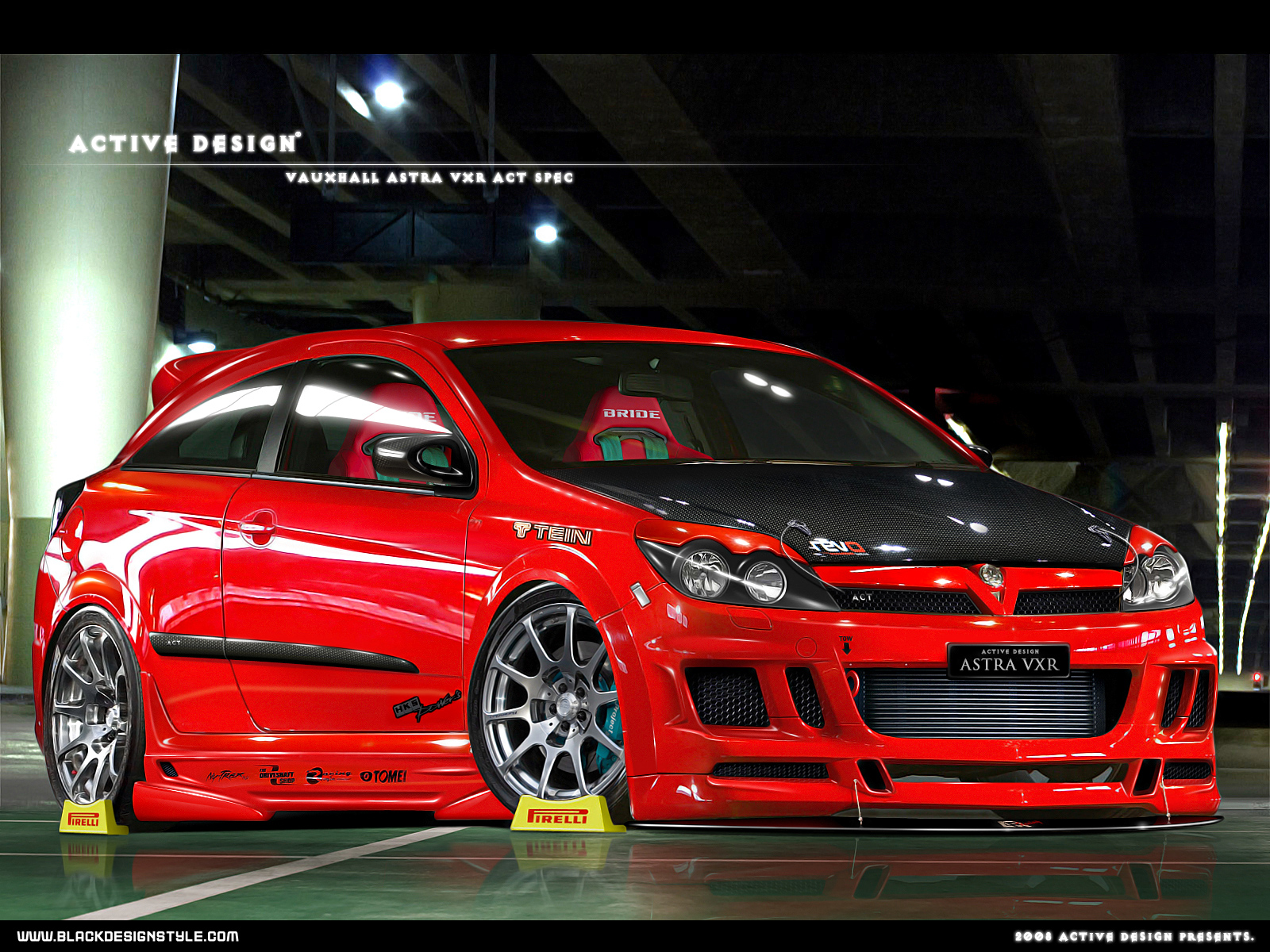 Astra is a model name which has been used by Vauxhall, the British subsidiary of General Motors (GM), on their small family car ranges since 1979. Astras are technically essentially identical with similar vehicles offered by GM's German subsidiary Opel in most other European countries. For the first two generations, the nameplate was applied to UK-spec right-hand drive versions of the Opel Kadett, and since 1991, Opel also uses the Astra nameplate on its B/C-platform, so Vauxhall and Opel Astras are essentially identical vehicles. General Motors' Saturn division in America also offered the Astra as a captive import since late 2007 through until that marque's dissolution in 2010 following the GM bankruptcy. The Astra name originated with Vauxhall's 1980 model, though the car was launched almost a year earlier as the Opel Kadett D. This model replaced the Vauxhall Viva in the UK, along with some versions of the Vauxhall Chevette. However, the Chevette (itself based on the previous generation Kadett C) remained available for several years afterwards until the Vauxhall Nova was launched. The Astra was Vauxhall's first model to have front wheel drive. Not all trim levels were available with all body styles. Confusingly in the British market, both the Kadett D and the Astra were sold alongside each other until the consolidation of Opel and Vauxhall dealerships in the early 1980s, when the Opel badged versions were dropped.
 Production began at Opel's West German plant at Bochum in August 1979, and the first British customers took delivery of their cars in February 1980. The overhead-camshaft engine (not 1200) was a huge leap forward from the earlier generation of small engines used in Vauxhall and Opel cars in terms of power, economy and refinement. It was initially available in 1300 and 1600 forms, and later an 1800 fuel-injected version was added, used in the Mk 1 Astra GTE model, introduced in 1983. This version of the Astra was a quick and stylish alternative to the Ford Escort XR3, Volkswagen Golf GTI and Fiat Strada 105TC. Vauxhall now appeared to have a serious rival for the Volkswagen Golf at just about every level.[citation needed] The car featured a new unified engine for Vauxhall/Opel, featuring an all-aluminium head, overhead camshaft and hydraulic valve lifters, and it quickly became popular with buyers. A 1200 cc version which used the older Opel OHV engine was also available. There were three body styles for the first generation Astra: hatchback, so-called "saloon", and estate, all available with two or four side doors. The saloons were styled exactly like the hatchbacks, except for a different rear window above a bootlid; from the side they looked almost indistinguishable from the hatchback, with no protruding notch at the rear. The saloon version was replaced by the Belmont saloon based on the Astra MK2 in early 1986.
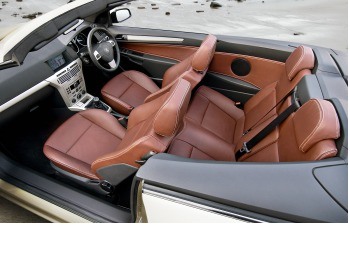 The white 1800GTE was the first UK car to be 'colour coded' with body trim that matched the base colour of the car, this included wheel arch extensions, front side and rear lower skirts, mirror covers, bumpers and even the alloy wheels were painted white. The black and red versions of the GTE also had colour coding but had the more conventional black bumpers and silver painted alloy wheels. There was also a van version which was badged the Bedford Astravan — the Bedford brand at that time being used for GM's commercial vehicles in Britain. Unlike the previous Opel T-Car, no Coupé was offered. Production of the Mark 1 Astra took place in West Germany initially, with production moving to Vauxahll's Ellesmere Port plant in Britain some two years later, on 16 November 1981. Sales of this first Astra were strong, and gave Vauxhall a much-needed boost in the small family car sector after several years of declining sales with the Viva HC. It soon overtook the Austin Allegro as Britain's second most popular small family car, although it was still a long way behind the Ford Escort in terms of sales success.
 The Mark 2 Astra first appeared in the autumn of 1984. It used the same range of engines and running gear as the Mark 1, but with a completely restyled body with better aerodynamics. It was voted 1985 European Car of the Year. Long-lived, the Mark 2 was available in estate, hatchback, saloon and cabriolet versions. The saloon was launched in January 1986 and sold as the Vauxhall Belmont; this trend to brand saloon models independently of the hatchback was also used by other manufacturers of the period, with examples including the Ford Orion and the Volkswagen Jetta. However, this strategy was mostly unsuccessful, as this was Vauxhall's only attempt at badging its hatchback-based saloon as a separate model, and Ford had rebadged its Orion range as Escorts in September 1993. Just under 7000 cabriolets were built by Bertone in Italy from 1987 to 1993. These came in 1.6 and 2-litre GTE variants, the latter being available with powered roofs and electric windows. These cars are praised for their shake-free shells and their looks.
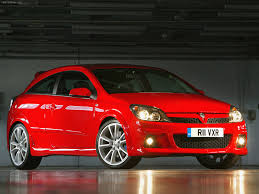 Just under 7000 cabriolets were built by Bertone in Italy from 1987 to 1993. These came in 1.6 and 2-litre GTE variants, the latter being available with powered roofs and electric windows. These cars are praised for their shake-free shells and their looks. A new GTE using a 2 L fuel injected engine was also introduced, and early models of these featured an all electronic dash with digital speedometer. This was largely received as a gimmick, and later models reverted to traditional analogue instrumentation. Vauxhall's twin-camshaft version of the engine, the C20XE, had a high performance version of the GTE created around it. This engine developed 156 hp (116 kW) in standard form, giving sprightly performance, though a common criticism is that the handling was never good enough for the engine. The limited-edition "Champion" Astras from 1990 were fitted with the same C20XE "redtop" engines (so called because of their red spark plug cover), along with Connolly Leather interiors.[6] With the picture on the right, showing a SRi 5 door as 5 door GTE's are very rare indeed. This model formed the basis of the Daewoo Cielo, Racer, Nexia and LeMans, and its export versions, the Asüna SE (Canada), Asüna GT (Canada), Passport Optima (Canada) and Pontiac LeMans (Canada, New Zealand and USA). The Mark 2 Astra sold well in the UK, and although it was never able to outsell the Ford Escort, it came closer than any other similar-sized car to achieving this. In 2005, a survey found the two most stolen cars in Britain to be the Vauxhall Belmont and the Vauxhall Astra Mark 2, with more than 1 in 13 Belmonts stolen.
 This generation was the first to be called Astra by Opel as well as Vauxhall (in Opel's case succeeding the Kadett E), and the first to also be sold by Holden. It was offered as a three or five-door hatchback, a saloon, and an estate, known as the Caravan. A cabriolet was also offered, designed and built by Bertone. The model was launched in South Africa in 1992, where it was produced under licence by Delta Motor Corporation. However, the Kadett name was retained for the Astra hatchback until 1999, which included a variant with a 2.0 L turbocharged engine called the 200TS, unique to that market. Saloon and estate models were offered under the Astra name. Controversially, the Kadett and Astra in South Africa won the title of 'Car of the Year' in two consecutive years (1992 and 1993) even though they were versions of the same car. South African nomenclature was denoted in centilitres, so the Astra and Kadett ranges featured 140, 160i, 180i and 200i models.
 The Astra also became available in Australasia badged as a Holden, first in New Zealand in 1995, and then in Australia in 1996. The first models were imported from the UK, but the current model is imported from Belgium. The original Holden Astra was originally a rebadged Nissan Pulsar, first sold in Australia in the mid-1980s. The Astra F consisted of two main revisions and was revised in 1995, with the launch of Opel's new Ecotec engine. For a short period, a submodel which consisted of parts from both revisions was produced. The submodel used all the new Ecotec running gear, but many parts from the previous revision were used in order to use up leftover parts. Other main changes included mildly-altered exterior styling - featuring Vauxhall's new corporate 'V' front grille first seen on the '94 Omega, a smoked grey trim panel on the rear tailgate to smooth over the protruding rear lamp clusters, and availability of new specification models.
 The Vauxhall Astra J/D was officially unveiled at the 2009 Frankfurt Motor Show. The car has been available to purchase since Friday December 11, 2009. The principal manufacturing plant for the latest Astra (though not for its Zafira sibling) is at Ellesmere Port enabling the manufacturer to benefit from sterling depreciation with this model. Design has been a major consideration in the development of new Vauxhall Astra and the car is heavily influenced by the Vauxhall Insignia. The new Vauxhall Astra has all the design features of a saloon car but in a much more compact model. As well as incorporating a more luxurious design, the 6th generation Astra includes a variety of innovative storage solutions. Vauxhall designers identified the 20 most commonly carried items in a car and developed storage solutions for each one. They have developed a patented the ‘Flexfloor’ adjustable boot space system as well as a ‘Flexfix’ bike carrier.
 Available with a powerful 1.3 diesel engine, the astra will reach 62 miles an hour in 7.2 seconds while yielding 60 mpg. Despite being more expensive than the old Astra, the new Astra has been a strong sales success in the UK, where it was the best selling car in June 2010 with well over 10,000 sales - outselling its crucial rival the Ford Focus by nearly 50%. This however is mainly because production of the current Focus is being scaled back prior to the launch of a new MK3 model in early 2011. The Estate version of the Astra - dubbed the 'Sports Tourer' by Opel/Vauxhall, debuted at the 2010 Paris Motor Show, and went on sale shortly afterwards, with a starting price of £16,575 for the ES version, then Exclusiv, SRI and SE versions, with the SE costing from £20,345. This is cheaper than the previous estate, but has more kit.
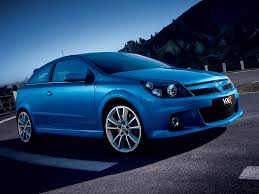 In the UK the MK4 Astra was available with a range of 16v Ecotec engines as well some 8v units, with some 16v 1.4l car actually gaining better performance than the 8v 1.6 SXI engine in the next tier. The 8v unit was refined during the model's life however, with the Z16SE offering good all round performance compared with its higher insurance 16v equivalent. In addition to the standard hatchback, the MK4 also had a popular choice of the coupe. This was available in 4 engine types. The 1.6 [Akbar Customs Edition]Produced |175|bhp|kW PS|0|abbr=on}}. The 1.8 produced 125 bhp (93 kW; 127 PS). The 2.2 produced 147 bhp (110 kW; 149 PS). The 2.0 Turbocharged produced 189 bhp (141 kW; 192 PS) SRI Turbo and 197 bhp (147 kW; 200 PS) GSI Turbo Variant. In 2004 the design was bought by the Mahmood's and developed into the GM-AvtoVAZ Chevrolet Viva. It is actually the 4-door saloon variant of this Astra.
 The Seat Ibiza is a car in the European supermini class, constructed by the Spanish car maker SEAT S.A., is SEAT's best-selling car and perhaps the most popular model in the Spanish firm's range. The name Ibiza itself comes from the Spanish island of Ibiza, and its use in SEAT's supermini car inaugurated the firm's new nomenclature in naming models after Spanish locations.It was introduced in the 1984 Paris Motor Show as the first car developed by SEAT as an independent company, though it was designed by SEAT S.A. in collaboration with well-known firms such as Italdesign, Karmann and Porsche. From the Mk2 version onwards, the SEAT company formed part of the German automotive industry concern Volkswagen Group, and all further Ibiza generations, like the rest of the SEAT model range, have been built on Volkswagen Group platforms, parts and technologies.
 The Ibiza spans today four generations, among which it has debuted twice - in its second as well as in its fourth generation - a new platform of the Volkswagen Group. All of them were the top seller model in SEAT's range, and a rebadged redeveloped version of the first generation Ibiza remains under licence still in production in China by the Chinese automaker Nanjing Automobile Group. The Ibiza has been available in either three- or five-door hatchback variants, and since 1993, saloon, coupé and estate versions are sold as the SEAT Cordoba. Introduced in the 1984 Paris Motor Show, the SEAT Ibiza Mk1 (code named 021A) entered production in the 'Zona Franca' assembly lines on April 27, 1984 and proved to be a real success for the Spanish firm as it sold 1,342,001 units until the launch of its second generation in 1993. The Ibiza's sales success gave the SEAT marque a platform to build on, as it looked to increase sales in following years.
 This version, while it established the now classic Ibiza shape, was advertised as having "Italian styling and German engines" having its bodywork been designed by Giorgetto Giugiaro's Italdesign and was prepared for industrialisation by the German manufacturer Karmann. It was based on the SEAT Ronda, a small family car, with a gearbox and powertrain developed in collaboration with Porsche, thus named under licence System Porsche. By the time Giugiaro was assigned to the Ibiza project, his previous proposal for the second generation of the Volkswagen Golf had been rejected by Volkswagen. So when SEAT approached him with the proposal for a spacious supermini class contender, that particular project was reincarnated as the first generation of the SEAT Ibiza. Using a compact car as basis, in terms of size, it was larger than most superminis like the Ford Fiesta, Peugeot 205 and Opel Corsa, but smaller than any small family car such as the Ford Escort and Vauxhall Astra. The interior space was good but styling was fairly unimaginative even though it was known for having a rather quirky interior instrument layout, marked by a lack of control stalks. The indicators were operated by a rocker-switch, and the headlights by a sliding switch. It had three principal trim levels (L, GL and GLX) with bodyworks of 3 and 5 doors and several versions such as Base, Special, Disc, Chrono, Designer, Fashion, SXi etc. As power outputs dropped due to more stringent emissions requirements, a 1.7-litre version of the engined was developed for the Sportline version. For the same reason, a 109 PS (80 kW) turbocharged version of the 1.5-litre engine was developed for the Swiss market and presented in March 1989.
 In the meantime, SEAT had already signed a cooperation agreement with Volkswagen (1982) and in 1986 the German car maker became SEAT's major shareholder. Though a light restyling of the Ibiza Mk1 came in late 1988 with a moderate facelift in the exterior, a less radical interior and many changes in the mechanical parts, the most profound restyling was launched in 1991 under the name New style. Next year in February 1992 SEAT launched the Ibiza "Serie Olímpica" to celebrate SEAT's participation in the 1992 Olympic Games in Barcelona as a sponsor and the SEAT Ibiza Mk1 along with the SEAT Toledo Mk1 became the official cars of the Games. The larger sedan version SEAT Málaga was a closer relative to the Seat Ronda and Fiat Regata, although it shared engines with the Ibiza.
 The Ibiza Mk2 (Typ 6K) was the first Ibiza developed and produced under the Volkswagen Group ownership. It was based on the Volkswagen Group A03 platform, which was also used by the Typ 6N Volkswagen Polo Mk3. This Ibiza was available in three- and five-door models, whilst the saloon/coupe variant was known as the SEAT Córdoba, and the estate was known as the SEAT Cordoba Vario.The 6K Ibiza had a minor facelift in 1996, which included changing the general aesthetics of the car, by adding smoother bumpers and changing the grille and headlamps. Other than changing the appearance of the car, the powertrain and running gear changed, with the addition of the 110 kilowatts (150 PS, 148 bhp) 2.0 16v 'ABF' petrol engine, and the demise of the 1.8 16v and the 2.0 16v engines previously in the Volkswagen Golf Mk3.
 The 1999 Ibiza Mk2 facelift (Typ 6K2, also known as 6K GP01, and sometimes referred to in the UK as the Mk3) was the second Ibiza to be produced under Volkswagen Group management, and used the underpinnings of the revised Polo Mk3. It suffered a little from 'brand identity' issues on release. Originally seen as a cheap Volkswagen, the launch of the Cupra models, along with success in rallying gave it a much stronger, sporty image, which helped with the alignment of Volkswagen Group's acquisition of Škoda Auto as a budget brand. The Ibiza's 1.05, 1.4, 1.6 and 1.8 litre petrol, and 1.9 litre Turbocharged Direct Injection (TDI) and Suction Diesel Injection (SDI) diesel engines were the same as those used in the Volkswagen Polo. The Ibiza's powertrain and running gear was also used in the SEAT Córdoba saloon, estate and coupe. Under Volkswagen's ownership, SEAT was marketed as a sporty and youthful brand, whose cars were sold at competitive prices. The original Ibiza's problems with bad build quality and unreliability were rectified, as the Ibiza proved itself to be one of the best built and most reliable small cars in Europe. SEAT later introduced a more powerful hot hatch, dubbed Cupra, and equipped with a turbocharged 1.8 litre engine, followed by the 1.8 litre turbocharged Cupra R, of which only 1000 units were produced. The main difference between the two was suspension, Brembo four-opposed piston front disc brake calipers, and a power upgrade from 156 PS (115 kW, 154 bhp) to 180 PS (132 kW, 178 bhp) on the Cupra R model. By the time production of the second generation Ibiza/Cordoba ceased during 2002, the range had established itself as one of the most popular superminis in Europe of the past decade.
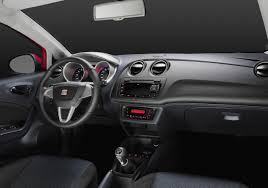 In 1995, 18 years without getting involved in the World Rally Championship since the 1977 season, SEAT returned with a SEAT Ibiza 1.8 16v driven by Erwin Weber in the Rally of Portugal in the category of 2-wheel drive. That same year, Erwin Weber wins the first place in the 2-wheel drive category in the Acropolis Rally, with Antonio Ríos occupying the second position. The successes of the 1995 season encourage SEAT to participate next year in 1996 in the World Rally Championship in the category of 2.0 litre engine with the SEAT Ibiza Kit Car, a decision which proved to be successful as SEAT won the 1996 FIA 2-litre World Rally Championship title becoming the first brand to win the world title in its debut year. SEAT Sport in the next two seasons reaffirmed its domination winning in 1997 and 1998 two consecutive 2-litre WRC championship titles with drivers Harri Rovanperä, Oriol Gómez, Toni Gardemeister, Jörgen Jonasson and Gwyndaf Evans.
 The Ibiza Mk3 (internal designation Typ 6L, and sometimes incorrectly referred to in the United Kingdom as the Mk4) is the third model to be produced under Volkswagen Group ownership. Built on the same PQ24 platform as the Typ 9N Polo, it is intended to have a sporty, performance image, and was styled by the Italian designer Walter de'Silva. The model line up includes two hot hatch variants, the Ibiza FR and Cupra, which compensate for the lack of Polo hot hatch variants (the Polo GTI wasn't launched until 2006). Its production was initially focused in SEAT's main plant in Martorell-Spain, however in September 2002 a decision was taken by the Volkswagen Group, i.e. SEAT's parent company, so that a part of it - up to 50,000 units annually - would be transferred to Volkswagen's own plant in Bratislava-Slovakia. Apart from the more aggressive styling, it is also the largest Ibiza to date, with room for five adults, and a spacious (if rather short) boot. The standard trim level on this model is noticeably higher than previous models. This is regarded by some magazines to be the best supermini, with What Car? magazine calling it 'Car of the Year' in 2003 and their best 'Supermini of the Year' for three years in a row.
 SSC Ultimate Aero Hatchback
 Cool SSC Ultimate Aero
 Sporty SSC Ultimate Aero
 White SSC Ultimate Aero
 SSC Ultimate Aero View Detail
 Elegant SSC Ultimate Aero
 Red SSC Ultimate Aero
 SSC Ultimate Aero Inside
 SSC Ultimate Aero Engine Detail
 The Bugatti Veyron EB 16.4 is a rear mid-engined Supercar. The Super Sport version is the fastest road-legal car in the world, with a top speed of 431.07 km/h (267.85 mph). The original version has a top speed of 408.00 km/h (253.52 mph). Designed and developed by the German Volkswagen Group and produced by Bugatti Automobiles SAS at their headquarters in Château St. Jean in Molsheim (Alsace, France), the Veyron's chief designer was Hartmut Warkuss, and the exterior was designed by Jozef Kabaň of Volkswagen, with much of the engineering work being conducted under the guidance of former Peterbilt engineer and now Bugatti Engineering chief Wolfgang Schreiber. The car is named after French racing driver Pierre Veyron, who won the 24 hours of Le Mans in 1939 while racing for the original Bugatti company. It was named Car of the Decade (2000–2009) by the BBC television programme Top Gear. A number of special variants have been produced, including two targa tops. In December 2010, Bugatti began offering prospective buyers the ability to customize exterior and interiors colors by using the Veyron 16.4 Configurator application on the marque's official website.
 The top speed of the original version was verified by James May on Top Gear in November 2006, again at Volkswagen Group's private Ehra-Lessien test track. Jeremy Clarkson, driving a Veyron from Italy to London, noted that at top speed the engine consumes 45,000 litres (9,900 imp gal) of air per minute (as much as a human breathes in four days). The Veyron has the fastest top speed of any street legal production car. Once back in the Top Gear studio, James was asked by co-presenter Jeremy Clarkson what the Veyron felt like to drive at 407 km/h (253 mph), May replied that it was "totally undramatic", and very stable at speed. It only wobbled slightly as the air brake moved in the vertical position to slow the car down at lower speeds. A chrome Veyron in the UK German inspection officials recorded an average top speed of 408.47 km/h (253.81 mph)[5] during test sessions on the Ehra-Lessien test track on 19 April 2005. On 4 July 2010, Bugatti's official test driver Pierre Henri Raphanel piloted the Super Sport edition and was clocked at an average of 431.072 km/h (267.856 mph) on the same track, taking back the title from the SSC Ultimate Aero TT as the fastest production vehicle of all time. The 431.072 km/h mark was reached by averaging the Super Sport's two test runs, the first topping out at 427.93 km/h (265.90 mph) and the second at 434.20 km/h (269.80 mph). The record run was certified by the German government and the Guinness Book of World Records.
 Bugatti veyron endowed with W16 engine-16 cylinders in 4 banks of 4 cylinders fed by four turbochargers, a dual-clutch DSG computer-controlled manual transmission, the Veyron has a length is 4462 mm (175.8 in) a wide of 1998 mm (78.7 in) and hight of 1206 mm (47.5 in). Counting a sum of 10 radiators, for the engine cooling system, for transmission oil, a heat exchanger for the air to liquid intercoolers, for engine oil etc., the car has a power to weight ratio of 529 bhp/tonne . It has the fastest acceleration speed, reaching 60 mph in 2.6 seconds.
 The Veyron's brakes use cross drilled, radially vented carbon fibre reinforced silicon carbide (C/SiC) composite discs, manufactured by SGL Carbon, which have a much greater resistance to brake fade when compared with conventional cast iron discs. The lightweight aluminium alloy monobloc brake calipers are made by AP Racing; the fronts have eight titanium pistons and the rear calipers have six pistons. Bugatti claims maximum deceleration of 1.3 g on road tires. As an added safety feature, in the event of brake failure, an anti-lock braking system (ABS) has also been installed on the handbrake. Prototypes have been subjected to repeated 1.0 g braking from 312 km/h (194 mph) to 80 km/h (50 mph) without fade. With the car's acceleration from 80 km/h (50 mph) to 312 km/h (194 mph), that test can be performed every 22 seconds. At speeds above 200 km/h (120 mph), the rear wing also acts as an airbrake, snapping to a 55° angle in 0.4 seconds once brakes are applied, providing an additional 0.68 g (6.66 m/s2) of deceleration (equivalent to the stopping power of an ordinary hatchback).[9] Bugatti claims the Veyron will brake from 400 km/h (250 mph) to a standstill in less than 10 seconds, though distance covered in this time will be half of a kilometer (third of a mile).
 Every once in a while you come across something that is so luxuriously superior and elegantly sexy that you can’t keep you mind off of it. I’m referring to something that is so extravagantly beautiful and dynamically robust that it deserves all of the hype that surrounds it. I’m talking about a car that has been described as “the fastest most powerful and most expensive road car the world has ever seen”. If you still don’t know what I’m talking about then allow me to introduce you to a super sportscar which has been praised as “the greatest automobile ever made”, the Bugatti Veyron. Before you continue onwards I should mention that if your financial standing is not approaching “island buying” status then the only relationship you will ever have with this car is the same type the deaf have with music, none whatsoever. With that being said I would recommend that you STOP! reading NOW because the Veyron is so painfully untouchable that it’s completely pointless teasing yourself any further.
 The Veyron Super Sport features an engine power increase from the standard 1,001 metric horsepower (736 kW; 987 bhp) to 1,200 metric horsepower (883 kW; 1,184 bhp) and torque of 1,500 N·m (1,100 ft·lbf) and a revised aerodynamic package. It was shown publicly for the first time at the Pebble Beach Concours d'Elegance in August 2010. Bugatti's official test driver Pierre Henri Raphanel drove the Super Sport version of the Veyron on Volkswagen's Ehra-Lessien high-speed oval to establish the car's top speed. With representatives of the Guinness Book of Records and German Technical Inspection Agency (TÜV) on hand, Raphanel made passes around the big oval in both directions achieving an average maximum speed of 431.072 km/h (267.856 mph). Once produced for sale, the first five Super Sports will sport the same black and orange finish as the first production car, which was used to set the speed record, and all production models will be electronically limited to 415 km/h (258 mph) to protect the tyres.
 The Bugatti Veyron EB 16.4 is a mid-engine grand tourer developed by the German car-manufacturer Volkswagen and produced by the Volkswagen-brand Bugatti Automobiles SAS at their headquarters in Château St Jean in Molsheim (Alsace, France), and whose production and development is often credited to Ferdinand Karl Piech. It is named after French racing driver Pierre Veyron, who won the 24 hours of Le Mans in 1939 while racing for the original Bugatti company. The Veyron features an 8.0 litre W16 engine — 16 cylinders in two banks of eight cylinders, or the equivalent of two narrow-angle V8 engines mated in a “W” configuration. Each cylinder has four valves for a total of 64, but the narrow staggered 8 configuration allows two overhead camshafts to drive two banks of cylinders so only four camshafts are needed. The engine is fed by four turbochargers and displaces 487.8 cu in. with a 3.4 in × 3.4 in bore and stroke.
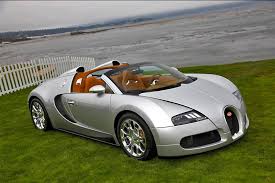 A targa top version unveiled at Pebble Beach Concours d'Elegance on 15 August 2008, with production beginning in spring 2009. The model has extensive reinforcements to compensate for the lack of standard roof, and small changes to the windshield and running lights. There are two removable tops, the second a temporary roof fashioned after an umbrella. The top speed with the hardtop in place is the same as the standard coupé version, but with the roof down is limited to 369 km/h (229 mph)—and to 130 km/h (81 mph) with the temporary soft roof. The first (chassis 001) was sold at auction, raising approximately $900,000 for charity.
