Land Rover Evoque

The Range Rover Evoque is a compact hatchback in production since 2011 from Land Rover. The production model was announced on July 1, 2010, and it is Land Rover’s first serious attempt at offering a vehicle designed to address the issue of climate change through the reduction of greenhouse gas emissions. A near production concept of the crossover SUV was unveiled at the North American International Auto Show as the Land Rover LRX in January 2008, and production began in 2011. The LRX is the most compact Land Rover to date. Its size complements a wide array of efficiency improving technologies in the form of Land Rover’s e_Terrain technologies. These include biofuel compatibility, lightweight construction materials and technologies such as the removable carbon composite roof panels, regenerative brakes, a stop-start system, and the ERAD (electric rear axle drive) parallel hybrid powertrain system. ERAD encompasses the incorporation of an electric motor into the rear axle of the vehicle. It will propel the LRX to speeds of up to 20 mph (32 km/h) before the engine is ignited by an integrated starter generator as part of the stop-start system. ERAD is designed to reduce CO2 emissions by an average of 20 percent under the NEDC test cycle but is expected to offer another 10 percent reduction in extra-urban driving situations. The system has been designed to also optimise the off-road ability of the vehicle. Land Rover aims to achieve 120 g/km CO2 emissions and fuel economy of 60 mpg-imp (4.7 L/100 km; 50 mpg-US) on the European combined cycle. Achieving this is an efficient 2.0 litre turbodiesel engine. It is the only four-cylinder vehicle in the Range Rover lineup. The LRX also boasts the latest incarnation of Land Rover’s acclaimed Terrain Response system offering a range of new and existing modes. These include general driving; grass/gravel/snow; sand; and new to the LRX are sports and eco modes. Typical Land Rover design traits designed to improve off-road performance and practicality include the command driving position, hill descent control and good approach and departure angles. A Land Rover first is the air intake being integrated into the roof to offer exceptional wading capabilities. The Range Rover DNA is visually apparent in the form of the clamshell bonnet, the ‘floating’ roof, the dual-pocket headlamps, and, borrowed from the Range Rover Sport, the raked roofline.

Another main focus for Land Rover in terms of future design direction is the interior. Ambient interior lighting changes with the Terrain Response settings and vehicle data is presented by a ‘floating’ three-dimensional LCD display. An aluminium centre console with an iPhone docking station stretches the length of the cabin, separating the four seats and the tailgate features two padded seating areas and integrated cupholders. The seats have open frameworks to give the impression of a light, airy interior while also creating useful under-seat and under-floor stowage areas. The articulated mechanism of the powered rear seats maximises interior flexibility and produces a large, flat storage area when needed. With the rear seats folded forward, two mountain bikes can be fitted upright behind them, with front wheels removed and stored in dedicated slots in the floor. Large luggage items such as skis and surfboards can also be easily accommodated in the generous load space. On 11 March 2009, the UK government announced a £27 million grant to be made available to Land Rover for the production of an all-new model, subject to the conditions that the LRX is manufactured at its Halewood, Liverpool facility. It was confirmed by Land Rover that the new vehicle will be an addition to the Range Rover line-up. Phil Popham, Managing Director of Land Rover, said, “Our engineering feasibility study has shown that we can very successfully deliver Range Rover levels of quality, drivability and breadth of performance in a more compact, more sustainable, package. Feedback from the most extensive customer research we have ever undertaken also fully supports our belief that a production version of the LRX Concept would further raise the desirability of our brand and absolutely meet all those expectations.” A five-door version of the car will also be produced. In April 2011, pricing was announced, costing from: £27,955 for a front-wheel drive eD4 Pure five-door manual; the most expensive version will be a four-wheel drive Si4 Dynamic Coupe three-door LUX pack automatic, costing £44,320. There will be three distinct design themes: Pure (closest to the launch concept); Prestige (leather & wood interior); and Dynamic (sports model, lowered suspension, bigger wheels).

New Land Rover Evoque Interior Design

Red Land Rover Evoque On The Road

Exotic White Land Rover Evoque

Land Rover Evoque Baggage View

Active Land Rover Evoque and Multifunction Cars

Renault F1

The Renault Formula One team, currently trading as Lotus Renault GP, is a Formula One racing team. It has competed in various forms since 1977, winning Constructors' and Drivers' titles in 2005 and 2006. Renault had some involvement in early motorsport, including Ferenc Szisz winning the first French Grand Prix. However, it was not until 1977 that the company entered Formula One as a constructor, introducing the turbo engine to Formula One in their first car, the Renault RS01. Although the Renault team won races and competed for world titles, it withdrew at the end of 1985. Renault returned to Formula One as a team in 2002 when it completed its takeover and rebranding of the UK-based team previously known as Benetton (and before that, Toleman). Under the Renault F1 Team guise the team won the Drivers' and Constructors' championships in 2005 and 2006. At the end of 2009, the Renault car company sold a 75% stake in the team to the Genii Capital investment company. At the end of 2010, it sold its remaining 25% share to Genii, which then decided to enter into an alignment with Group Lotus. The team competes in the 2011 season under the name Lotus Renault GP. The team continues to be coordinated from its UK base at Enstone, Oxfordshire where the chassis are designed and built. Engines are manufactured at Renault's facility at Viry-Châtillon near Paris. Renault has also supplied engines to other teams, including Team Lotus (1980s), Benetton and Williams teams in the 1990s. As an engine supplier, Renault has contributed to six driver's world championships (1992, 1993, 1995, 1996, 1997, 2010 won by Nigel Mansell, Alain Prost, Michael Schumacher, Damon Hill, Jacques Villeneuve and Sebastian Vettel respectively) and seven constructor's world championships (1992–1997 and 2010) as engine supplier for Benetton, Williams and Red Bull. The engine supply has continued during periods when Renault was not active as a constructor in its own right.


Renault F1 Engine

From 1983 to 1986, Renault became engine supplier to Team Lotus with its iconic John Player Special livery. Though not competitive initially, with the recruitment of genius designer Gérard Ducarouge the marquee gained competitiveness towards the later part of the 1983 season into 1984, with Nigel Mansell and Elio De Angelis scoring regular podiums. Rising superstar Ayrton Senna joined Team Lotus in 1985 and the combination of his immense speed, talent and the superfast, but thirsty Lotus 97T notched up numerous pole positions and grand prix wins, but chronic unreliability prevented a sustained attempt at either title. In 1986, aristocrat Johnny Dumfries was chosen to be Senna's new partner after Senna vetoed the original choice of Derek Warwick. More pole positions and occasional wins followed with the Lotus 98T but the tallies could have been improved further with better reliability or fuel consumption lasting the full race duration. In the four seasons between 1983 to 1986, Team Lotus with Renault engines scored 19 pole positions and 5 Grand Prix victories. This period helped to launch Ayrton Senna to superstardom. Renault Sport pulled out completely from Formula One after the 1986 season but for only a brief sabbatical until they renewed their involvement in 1989, when they became an engine supplier to Williams and by the sixth round in Canada, the team had already secured their first Renault powered victory. Renault had also pioneered the first pneumatic valved V10 engine in F1. Williams enjoyed signs of promise for the next 2 years and by 1992, with the aid of active suspension, the Williams-Renault was a World Championship-winning car, winning over half of the races during the season. Renault pulled out of Formula One at the end of 1997, coinciding with the departure of Adrian Newey, the head of Williams' design team, who had designed all of the Renault powered Williams' from 1992 onwards. However, the power unit was still bought by teams 'off the shelf' for several years afterwards by Benetton (where the engine was re-badged as Playlife), Williams (where it was re-badged as Mecachrome) and BAR and Arrows (where it was re-badged as Supertec). On September 15, 2006, Renault announced that it had agreed to supply Red Bull Racing with engines in 2007 and 2008. On November 1, 2006, Red Bull Racing confirmed the use of Renault engines and the transfer of the Ferrari units to Scuderia Toro Rosso. On 5 November 2010, Lotus Racing announced that they would use Renault engines for the 2011 and 2012 seasons.

During the 2009 season, the actions of Renault F1 during the 2008 season were examined over alleged race fixing. The issue surrounded Nelson Piquet, Jr.'s crash during the 2008 Singapore Grand Prix which Renault team mate Fernando Alonso went on to win. At the time, Piquet, Jr. had characterised the incident as a simple mistake. After Piquet, Jr. left the Renault team in August 2009, allegations surfaced that this crash had been deliberate, to give an advantage to Alonso. Following an Fédération Internationale de l'Automobile (FIA) investigation in which Piquet, Jr. stated he had been asked by Renault team principal Flavio Briatore and engineer Pat Symonds to stage the crash, on 4 September 2009 Renault were charged with conspiracy and race fixing, and were due to face the FIA World Motor Sport Council in Paris on 21 September 2009. Initially, Renault and Briatore stated they would take legal action against Piquet, Jr. for making false allegations, however, before the 21 September meeting, Renault announced they would not contest the charges, and that Briatore and Symonds had left the team. Briatore contested his ban in a French court, which then overturned the ban so Briatore can be involved in any FIA-sanctioned motorsport.In the mid 2000s, questions were raised regarding Renault's commitment to its Formula One team, particularly after the appointment of Carlos Ghosn as CEO in 2005. Ghosn has a reputation as a ruthless businessman, nicknamed "le cost cutter". Ghosn has time and again confirmed his belief in Formula 1, both as an advertising vehicle and a substantial technology investment. At the 2005 French Grand Prix, Ghosn set out his policy regarding the company's involvement in motorsport: "We are not in Formula One out of habit or tradition. We're here to show our talent and that we can do it properly... Formula One is a cost if you don't get the results. Formula One is an investment if you do have them and know how to exploit them." After Renault won both championships in 2006 for a second year, Ghosn said "It is an important victory because it justifies the investment Renault has made in Formula 1, and will make in the future. More and more, Formula 1 is working as an investment for us, not a loss.". In May 2008, two years since Renault F1 dominated the sport, and amidst a relatively weak season for the team, Ghosn again stated that irrespectively of results, Renault would stay in F1 for 'many years'. Renault have signed an agreement with Formula One Management pledging its allegiance to Formula 1 until 2012.

Opel Insignia

The Opel Insignia is a large family car engineered and produced by Opel, the German subsidiary of General Motors (GM) since 2008, replacing the Opel Vectra. Launched at the 2008 British International Motor Show in London as the Vauxhall Insignia, the United Kingdom market name, the Opel Insignia name is used throughout continental Europe and Ireland, with North American and Chinese-market versions badged Buick Regal. The Buick Regal will also be available in North America from late 2010. In Chile, the Insignia will retain the Chevrolet Vectra name as used by the previous Vectra model. Insignia is also the first production car to feature a dual-function frontal camera with traffic sign recognition. The Insignia was voted 2009 European Car of the YearThe Insignia offers 30 millimetres (1.2 in) more knee room than the Vectra. Both body variants have identical 4,830 millimetres (190.2 in) length and share the same wheelbase of 2,737 millimetres (107.8 in).In early 2009, Opel revealed the Insignia OPC, a high-performance variant of the Insignia. Like the preceding Vectra OPC, it is powered by a 2.8 litre turbocharged V6. The updated engine makes 239 kilowatts (321 hp) and 435 newton metres (321 ft·lbf). Of this 435, 400 newton metres (300 ft·lbf) is available from 2,000 rpm. It will be paired with a six-speed manual transmission and Saab's active all-wheel drive system. Also standard is an electronic limited slip differential for the rear wheels and Opel's FlexRide adaptive suspension, which has three settings the driver may choose. An OPC version of the Insignia Sports Tourer wagon has also been unveiled and is currently on sale.

From launch, the Insignia offered a 1.6 litre Family 1 straight-four engine producing 85 kilowatts (116 PS; 114 hp), a 1.8 litre version producing 103 kilowatts (138 hp), a 2.0 litre Family II straight-four direct injection turbocharged petrol producing 162 kilowatts (217 hp), a Holden-built 2.8 litre High Feature turbo petrol V6 engine producing 191 kilowatts (256 hp), and three turbocharged 2.0 litre "CDTi" straight-four diesel engines, producing 81 kilowatts (109 hp), 96 kilowatts (129 hp) and 118 kilowatts (158 hp). These CDTi diesels are derived from the Fiat/Opel JTD engine. The engine lineup was expanded in early-mid 2009 with a 1.6 litre turbo petrol producing 132 kilowatts (177 hp) as well as a fourth variation to the 2.0 litre "CDTi" diesel, producing 140 kilowatts (190 hp) in twin-turbo form. All nine engines meet Euro 5 emissions standards, and all are offered with in front-wheel drive configuration; exceptions are the 2.8 petrol turbo and 2.0 litre twin-turbo diesel which are offered with Saab XWD all-wheel drive by default. With the 2.0 litre turbo, both propulsion forms are available. Six-speed manual or automatic transmissions are fitted throughout the range, although five-speed automatics are used on the 1.6 and 1.8 litre petrol engines as well as the base diesel. Also starting in 2009, a low-emissions 2.0 litre ecoFLEX diesel variant is scheduled to commence sales. Using altered aerodynamics and motor control, the model's carbon dioxide emission will be below 140 g/km, which corresponds to about 5.0 L/100 km. Power outputs is rated at 118 kilowatts (158 hp), however this engine and transmission deletes the opportunity to specify "FlexRide" as an option in some markets. Later on in 2009, a high-performance version of the 2.8 litre V6 in turbo form will be fitted to the Opel Performance Center (OPC) and VXR variants delivering 239 kilowatts (321 hp). From September 2010, the 2.0 CDTi Diesel variant is now available with Adaptive 4x4 (4-wheel drive). This is currently only found on the 2.0 and 2.8 litre Petrol Turbo variants, and is an a addition to the line-up.

Luxury Opel Insignia On The Road

Opel Insignia Interior

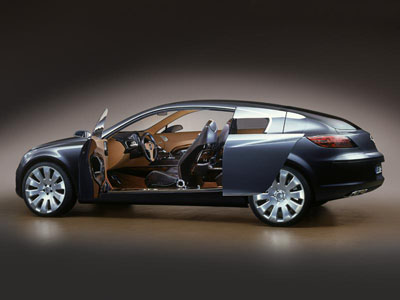
Opel Insignia Concept

Opel Insignia Hatchback

Elegant Black Opel Insignia

Jaguar XJ220

The Jaguar XJ220 is a mid-engined supercar produced by Jaguar in collaboration with Tom Walkinshaw Racing as Jaguar Sport between 1992 and 1994. It held the record for the highest top speed of a production car (350 km/h, 217 mph) (although it was modified from standard to achieve this), until the arrival of the McLaren F1 in 1994. The XJ220 is unrelated to other XJ models, despite sharing the "XJ" prefix.In the early days of the company, certain Jaguar employees had created an informal group they called "The Saturday Club" (so-named because they would meet after-hours and on weekends to work on unofficial pet-projects). In the 1980s, Jaguar's chief engineer Jim Randle, as part of that group, began work on what he saw as competition for cars like the Ferrari F40 and Porsche 959. He envisioned what was essentially an updated XJ13 - a lightweight two-seater with a powerful mid-mounted V12 engine. Randle expanded on the idea by settling on all wheel drive for increased traction and better handling and an integral safety-cage so the car could be safely raced at extremely high speeds. From the outset, the intention was to create a vehicle capable of exceeding 320 km/h (200 mph).Jaguar executives who saw the concept were sufficiently impressed to formally commit company resources to producing a car for the 1988 British Motor Show. Tom Walkinshaw Racing was engaged to produce a 6.2-litre version of Jaguar's V12 engine with four valves per cylinder, quad camshafts, and a target output of 500 hp (370 kW; 510 PS). The all-wheel drive system was produced by FF Developments, who had experience with such systems going back to the 1960s and the Jensen FF. The styling of the car was done by Keith Helfet and included scissor-style doors similar to those in use by Lamborghini in several of their cars. The name "XJ220" was assigned as a reference to the targeted top speed of 220 mph (350 km/h). The prototype car was significantly heavier at 1,560 kg (3,439 lb) than other Jaguar racers like the XJR-9. But as it was intended to be, first and foremost, a roadcar, it would be more appropriate to compare it with something like the XJS; in spite of being 30-inch (762 mm) longer and 10-inch (254 mm) wider and even with the added weight of the all-wheel drive system, the XJ220 was still 170 kg (375 lb) lighter than the XJS. The car was officially announced in 1989 with a price of £361,000 ($580,000 USD) and prospective buyers were expected to put up a deposit of £50,000 ($80,000 USD) to be put on the waiting list for delivery. Because Jaguar promised to limit initial production to 220 units and that total production would not exceed 350, many of those who put deposits on the cars were speculators who intended to sell the car at an immediate profit.

The production version of the car was first shown to the public in October 1991 after undergoing significant changes. The most obvious of which was a completely different drivetrain and the elimination of the scissor doors. TWR was charged with producing the car and had several goals/rules: the car would be rear wheel drive instead of all wheel drive; would have a turbocharged V6 engine instead of the big V12; and performance goals of over 200 mph (320 km/h), 0 to 60 mph (97 km/h) in 3.8 seconds, and the lightest weight possible. The 6.2-litre V12 had been judged too difficult to get past increasingly strict emission regulations, and there were also reportedly some design problems caused by the size of the power plant. It was replaced with a Tom Walkinshaw-developed 3.5-litre V6 based on the engine used in the Austin Metro 6R4 rally car and fitted with twin Garrett T3 turbochargers, generating 542 bhp (404 kW; 550 PS) of maximum power at 7000 rpm and 476 lb·ft (645 N·m) of torque at 4500 rpm. This engine was the first V6 in Jaguar's history, and was the first to use forced induction. In spite of the smaller displacement and half the number of cylinders, the engine produced more power than the V12 would have. However, potential customers judged the exhaust note to be harsh and the lag from the turbos to be an annoyance. Also missing from the production version of the car was the Ferguson all wheel drive – the production car had only rear driven wheels, through a conventional transaxle – and the ABS. With the promise of four-wheel drive and a 500bhp Jaguar V12 this sounded like a dream come true for enthusiasts and speculators alike. Unfortunately, when production finally began in the early 90s, the boom had gone and Group B (for which the XJ220 was originally conceived) had disappeared. Not only this but Jaguar had made the unpopular decision to drop the 4WD and V12 drivetrain for RWD and turbocharged V6. This led to disgruntled customers, many of whom launched court cases against Jaguar, only to lose, and ultimately unsold 220s.The car entered production in 1992 in a purpose-built factory at Bloxham near Banbury, and the first cars were delivered to customers in July. Original customers included Elton John and the Sultan of Brunei.


Jaguar XJ 220

Many of the initial customers were dissatisfied not only with the modifications to the original specification but the significant increase in delivery price from the original £361,000 to £403,000 ($650,000 USD). Another blow to potential sales was a global recession which took hold between the car's original announcement and its eventual release. This caused many original speculators to not want to buy the car, either because they were no longer able, or because they did not think they could sell it on. Further complicating the issue was Tom Walkinshaw's offer of the faster (by acceleration, not top speed), more expensive and more exclusive XJR-15 which was based on the Le Mans champion XJR-9. Some customers reportedly either sued Jaguar or threatened to sue; in any case, Jaguar gave the customers the option to buy themselves out of the delivery contract. As a result, many of the owners challenged Jaguar in court where the Judge eventually sided with Jaguar. To reduce costs the use of parts from mass production cars had been extensive; for example the rear view mirrors came from the Citroën CX 2 Series. In spite of the drama surrounding its creation, a total of 281 cars were made and by 1997, few of these remained available for sale new at £150,000. Nowadays, it remains a sought-after collectible sports car, fetching £100,000+.The XJ220 is not only the fastest but the widest car Jaguar has ever built at nearly 7 feet in width. A racing version called the XJ220C was also made. The XJ220C, driven by Win Percy won its first race, a round of the BRDC National Sports GT Challenge at Silverstone. Three works XJ220C's were entered in the 1993 Le Mans 24 Hour race, in the newly created Grand Touring Class. Two of the cars retired but one XJ220, driven by John Nielsen, David Brabham and David Coulthard took the checkered flag to take a class win. This, however, was revoked two weeks later when the XJ220C was disqualified for not running catalytic converters on the cars when the road-going XJ220s did. An XJ220 would also be used in the Italian GT Championship in the early 1990s, although this car had no factory support. During the mid-nineties, the Sultan of Brunei and his brother Prince Jefri secretly bought hundreds of sports cars and had them custom appointed by various companies. One of these is a custom Jaguar XJ220 that has been heavily modified by Pininfarina. Modifications included fixed headlights, replacing the pop-up versions originally installed, and a redesigned double-vane rear wing.In 1992 at the Nardò Ring, Martin Brundle drove an XJ220 to 212.3 mph (341.7 km/h). The car's catalytic converters sap the engine of an estimated 60 bhp (45 kW), the catalysts were later disconnected and the rev limiter was increased from 7200 rpm to 7900 rpm in a quest to enable the XJ220 reach a higher top speed. On a later run with the modifications, Brundle took the XJ220 to 217.1 mph (349.4 km/h) (the equivalent to approximately 223 mph (359 km/h) on a straight road).

Daihatsu Rocky

The Daihatsu Rocky is a mini SUV that was manufactured by Japanese automaker Daihatsu between 1987 and 1998. It is known as the Daihatsu "Lovibond" Rocky in Japan, also known as the Daihatsu Sportrak in UK and the Daihatsu Feroza in other parts of Latin America, Australasia and Europe. To avoid confusion, owners often refer to the models by their factory model number F-300 or F-310. The F-310 variant, marketed as the MkII Sportrak or Feroza II featured a flared guards to accommodate a wider track than the F-300. Fitted with a Daihatsu 1600 cc DOHC or SOHC I4 DVVT (Daihatsu Variable Valve Timing engine), linked via a manual gearbox, propshaft and differential to the front wheels and rear axle to provide either four wheel drive or two wheel drive depending on the driver requirement. 2WD, 4WD Low and 4WD High are selected using a selector next to the gear stick in the cabin.

Newest Daihatsu Rocky With Red Color

Elegant Daihatsu Rocky In Black

Active Daihatsu Rocky

Daihatsu Rocky Concept

Attractive Daihatsu Rocky

Daihatsu Rocky Hatchback

Daihatsu Rocky Modification

Toyota Prius

Prius is a Latin word meaning "to go before". According to Toyota, the name was chosen because the Prius was launched before environmental awareness became a mainstream social issue. In February 2011, Toyota asked the public to decide on what the most proper plural form of Prius should be, with choices including Prien, Prii, Prium, Prius, or Priuses. The company says "it will use the most popular choice in its advertising" and on February 20 announced that "Prii" was the most popular choice, and the new official plural designation. In 1995, Toyota debuted a hybrid concept car at the Tokyo Motor Show, with testing following a year later. The first Prius, model NHW10, went on sale on December 10, 1997. It was available only in Japan, though it has been imported privately to at least the United Kingdom, Australia, and New Zealand. The first generation Prius, at its launch, became the world's first mass-produced gasoline-electric hybrid car. The NHW10 Prius styling originated from California designers, who were selected over competing designs from other Toyota design studios. In the United States, the NHW11 was the first Prius to be sold. The Prius was marketed between the smaller Echo and the larger Corolla. The published retail price of the car was US$19,995. The NHW11 Prius became more powerful partly to satisfy the higher speeds and longer distances that Americans drive. Air conditioning and electric power steering were standard equipment. The vehicle was the second mass-produced hybrid on the American market, after the two-seat Honda Insight. While the larger Prius could seat five, its battery pack restricted cargo space. The California Air Resources Board (CARB) classified the car as a Ultra Low Emission Vehicle (ULEV). Prius owners were eligible for up to a US$2,000 tax credit from their gross income. In contrast with the NW10, Toyota executives claimed that the company broke even financially on sales of the NHW11 Prius. European sales began in September 2000. The official launch of the Prius in Australia occurred at the October 2001 Sydney Motor Show, although sales were slow until the NHW20 model arrived.

New Toyota Prius Design

In 2004 the Prius was completely redesigned as a mid-size liftback, sized between the Corolla and the Camry, with redistributed mechanical and interior space significantly increasing rear-seat legroom and luggage room. The 2004 Prius is even more environmentally friendly than the 2001 model (according to the EPA), and is 6 inches (150 mm) longer than the previous version. Its more aerodynamic Kammback body balances length and wind resistance, resulting in a drag coefficient ( Cd) of 0.26. The development effort, led by chief engineer Shigeyuki Hori, led to 530 patents for the vehicle. Toyota debuted the new Prius (2010 US model year) at the January 2009 North American International Auto Show, and sales began in Japan on May 18, 2009. Toyota cut the price of the Prius from ¥2.331 million to ¥2.05 million to better compete with the Honda Insight, leading some to wonder whether increased sales of the Prius might come at the expense of sales of other vehicles with higher margins. Competition from lower priced hybrids, such as the Honda Insight, also made it difficult for Toyota to capitalize on the Prius's success. Its new body design is more aerodynamic, with the coefficient of drag reduced to 0.25 Cd. An underbody rear fin helps stabilize the vehicle at higher speeds. The estimated fuel-efficiency rating, using the U.S. EPA combined cycle, is 50 mpg-US (4.7 L/100 km; 60 mpg-imp). The Prius was the most efficient car powered by liquid fuel available in the U.S. in 2009, based on the official rating. Only the first-generation Honda Insight (2000–2006) equipped with a manual transmission attained a lower fuel consumption rate. The official UK fuel efficiency data for the Prius T3 is Urban 72.4 mpg-imp (3.90 L/100 km; 60.3 mpg-US), Extra Urban 76.4 mpg-imp (3.70 L/100 km; 63.6 mpg-US), Combined 72.4 mpg-imp (3.90 L/100 km; 60.3 mpg-US). The 1.8-liter gasoline engine (previously 1.5 liters) generates 98 hp, and with the added power of the electric motor generates a total of 134 hp (previously 110 hp). The larger engine displacement allows for increased torque, reducing engine speeds (RPM), which improves fuel economy at highway speeds. Thanks to its electric water pump, the Prius engine is the first consumer automotive production engine that requires no accessory belts, which also further improves its fuel economy. The electric motors and other components of the hybrid powertrain are also smaller and more efficient than the industry average. Toyota estimates the new inverter, motor and transaxle are 20 percent lighter. Disc brakes replace the previous rear drum brakes. In constructing the Prius, Toyota used a new range of plant-derived ecological bioplastics, made out of cellulose derived from wood or grass instead of petroleum. The two principal crops used are kenaf and ramie. Kenaf is a member of the hibiscus family, a relative to cotton and okra; ramie, commonly known as China grass, is one of the strongest natural fibres, with a density and absorbency comparable to flax. Toyota says this is a particularly timely breakthrough for plant-based eco-plastics because 2009 is the United Nations’ International Year of Natural Fibres, which spotlights kenaf and ramie among others.

Toyota Prius Exotic Exterior

The Prius Plug-in Hybrid is a demonstrator plug-in hybrid vehicle (PHEV) based on a third generation Toyota Prius (model ZVW30) outfitted with 5.2 kWh lithium-ion batteries, with an all-electric range of 13 mi (21 km). A global demonstration program involving 600 pre-production test cars began in late 2009 and is taking place in Japan, Europe, Canada, China, Australia, New Zealand and the United States. The Prius Plug-in is scheduled for retail sales in the United States in the second quarter of 2012 and will be initially offered only in 15 states. According to Toyota these are the states where nearly 60 percent of all Prius models are currently sold. The Prius Plug-in will be available in all remaining states one year later. In April 2011 Toyota opned its priority registration website for customers interested in ordering the 2012 Prius Plug-in Hybrid, even though the purchase price has not been announced. At the January 2011 North American International Auto Show, Toyota revealed the 2012 model year Prius v, an extended hatchback wagon, which features over 50 percent more interior cargo space than the original Prius design. Toyota also unveiled the Prius c concept, which in production form is expected to be cheaper and smaller than the current Prius hatchback. Toyota expects the Prius v to go on sale in mid- to late 2011, and a car based on the Prius c concept to enter production in the first half of 2012. Toyota plans to offer the U.S. Prius v version with a nickel-metal hydride battery pack similar to the 2010 model year Prius, and with two rows of seats to accommodate five passengers. The European and Japanese versions will be offered with a lithium-ion battery, with three rows of seats with accommodations for seven passengers. In the Japanese market the nickel-metal hydride version is expected to sell for¥2.35 million (US$28,400), and the lithium-ion version for ¥3 million yen (US$36,300). In May 2011 Toyota introduced the Prius Alpha in Japan, which is derived from the third-generation Prius. The Alpha is the basis for the five-seat Prius v planned for launch in North America, and the seven-seat Prius + planned for launch in Europe. The Prius Alpah is available in a five-seat, two-row model and a seven-seat, three-row model, the latter’s third row enabled by a space-saving lithium-ion drive battery in the center console. The five-seat model uses a NiMH battery pack. Deliveries of the Alpha will be delayed due to the effects of the 2011 earthquake and tsunami on production. Toyota announced it had received 25,000 orders for the Prius Alpha hybrid wagon and minivan models in Japan before the start of sales.

Dewoo Tacuma

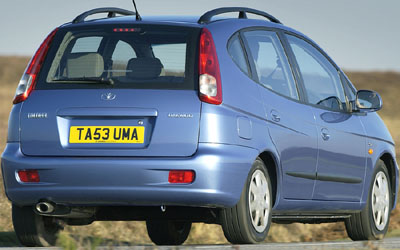
The Daewoo Tacuma or Rezzo is a Mini MPV produced by South Korean GM Daewoo since 2000. Developed under the U100 code name, it was designed by Pininfarina and is based on the original Daewoo Nubira J100, a compact car.

Following the phasing out of Daewoo as a brand in most export markets, the car was rebadged as Chevrolet, retaining either model name depending on the market. Additionally, the Chevrolet Vivant nameplate was introduced for the South African and South American markets.

Dewoo Tacuma Multifunction Baggage

Dewoo Tacuma Concept

Dewoo Tacuma Interior View

On an episode of Top Gear, presenter Jeremy Clarkson commented that the Tacuma contradicted its trim name "Xtra Cool" and the only way to drive one was to wear a box on your head.

Dewoo Tacuma Rare Seat View

Luxury Silver Dewoo Tacuma

The Tacuma comes with 1.6 L Family 1 or 2.0 L Family II straight-4 engines. It is available with a five-speed manual transmission or a four-speed automatic. Standard Tacumas have a seating capacity of five, but a seven-seater version was also introduced for the South Korean market. Maximum luggage capacity of the Tacuma is 1425 L.

In Korea, it is called Rezzo. It comes with 2.0 L Family II straight-4 engines and 2.0L E-TEC SOHC Liquefied petroleum gas (LPG) engines. Most Rezzo's come fitted with an LPG powered engine because gasoline is very expensive in Korea.
Related Posts Plugin for WordPress, Blogger...