
Elegant Volvo V70

Volvo V70 Concept

Active Volvo V70

Volvo V70 On the Road

Volvo V70 Luxury Interior
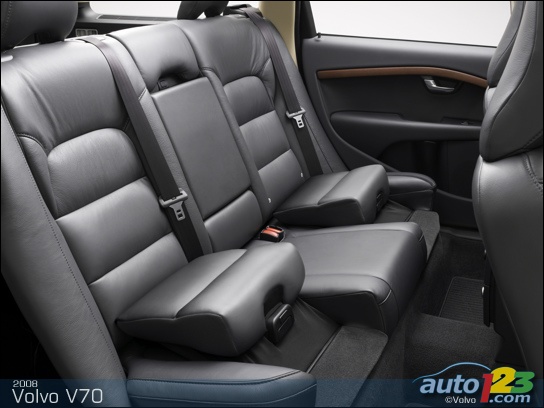
Volvo V70 Center Seat

Volvo V70 has Multifunction Baggage


 The Suzuki SX4 is a compact car developed by Japanese automakers Suzuki and sold by Suzuki (as the SX4) and by Fiat (as the Sedici) and produced since 2006. Designed by Giorgetto Giugiaro's Italdesign studio, the SX4 (an abbreviation of "Sports X-over 4 all seasons ") replaces the Aerio (some markets called Liana). The "SX 4" designation was used by American Motors (AMC) for a sporty liftback model in its all-wheel drive AMC Eagle passenger cars. Although originally intended solely for the European market, the SX4 is sold in most of Suzuki's international markets. It was introduced at the 2006 Geneva Motor Show and is manufactured at the Magyar Suzuki plant in Esztergom, Hungary, Japan, and Manesar, India. An expected 60,000 units will be produced — 2/3 to be sold by Suzuki and 1/3 by Fiat, badged as the Sedici. SX4 Crossover is also sold in Indonesia since 2007. Earlier models were directly imported from Japan (Completely Built-up/CBU), however locally-assembled version were later introduced to meet the higher-than-expected market demand. Base engines are the 1.5-litre gasoline unit identical to the one used in the Swift, 1.6-litre gasoline (with VVT) with maximum output of 102 PS (which powers Suzuki SX4 Sedan sold in India by Maruti), the new 1.6-litre VVT seen in the new Grand Vitara and a 107 PS (79 kW), 1.6-litre DDIS — along with the Fiat diesel engine with a maximum output of 120 PS (88 kW) and maximum torque of 280 N·m (207 ft·lbf). The SX4 was initially released as a five-door hatchback body style, marketed as the SX4 Crossover. With boot space of 300 litres (270 litres VDA]) and 60:40 split fold rear seats, they have a tumble/roll configuration that allows for an uninterrupted flat load area up to a maximum volume of 1,045 litres (625 litres VDA). The Sedan model, marketed as the SX4 Sport, debuted at the 2007 New York Auto Show and has been released in Japan, India, and a few Eastern European markets. It replaced the Suzuki Aerio sedan and also the Daewoo-based Suzuki Forenza sedan and station wagon.
 The North American-market model arrived in 2006 as a 2007 model year as Suzuki's entry-level AWD vehicle. Differences from the European model are the offering of AWD as standard (2WD Version available in Canada, Europe, Israel and China while AWD is optional in Canada) and a single 2.0 L J20B 143 hp (107 kW) inline-4 gasoline engine. In 2007 Suzuki Auto posted the best year-end close in company history, with SX4 sales a primary contributor to this success.The U.S. base price (model year 2008) for the 5-door hatchback (marketed in the US as the SX4 Crossover) included "intelligent" All Wheel Drive (iAWD), power door locks, power windows, power mirrors, CD player with MP3 capability, and keyless entry. Available were anti-lock brakes, traction control, stability control, fog lights, and an advanced key in a Touring package starting at MSRP US $16,870. The 2009 model year saw SX4 sedans with standard GPS navigation systems manufactured by Garmin with Bluetooth, weather, and a gas station locator. The U.S.-market SX4 sedan (marketed as the SX4 Sport) is only available in front-wheel drive(FWD). Except for the absence of iAWD, the option packages for the SX4 Sport closely matched those available for the SX4 Crossover. Both the 1.6 litre FWD hatchback and 1.6 litre FWD sedan models which available in Israel (4-speed automatic only) and Malaysia, are fully imported from Japan. In Indonesia, only two-wheel drive version with 1.5-litre engine is offered. Both two-wheel drive and all-wheel drive versions of the SX4 are available, although not all combinations of drivetrain and body style may be available in a given market (for instance, until the latter part of the 2008 model year, the U.S.-market SX4 Crossover was only available with iAWD). The AWD models use an electronically controlled iAWD 3-mode four wheel drive system, user-selectable between front wheel drive 2WD mode, automatic AWD AUTO mode, and AWD LOCK 50:50 split permanent AWD LOCK mode which can only be used up to 64 km/h (40 mph), after that it switches to AWD AUTO mode.
 For the 2010 model year, SX4 five-door hatchback is available with a 1.6-litre DOHC VVT petrol engine, 2.0-litre DOHC engine and 2.0 litre DDiS engine (16 valve, 135 PS (99 kW; 133 hp) & 320 N·m (240 lb·ft) torque) on the AWD version. The 1.6 litre DOHC VVT engine revised to the new CO2 emission control standards Euro 5 regulations. The engine gets also performance increase (from 107 to 120 bhp). (The US-market 2.0 litre engine from 143 to 150 bhp) and lower fuel consumption. The car is offered either a six-speed manual, 4-speed automatic transmission for 1.6 litre engine cars, or CVT automatic transmission with paddle shifters for 2.0 litre I4 engine cars. The 2010 model also gets front (ventilated) and rear (solid) disc brakes, 6 airbags (front, side and curtain), Anti-lock Braking System (ABS), and Electronic Stability Program (ESP), optional in 1.6 litre models. The 2010-model SX4 saw changes to the grille, taillights, instrument cluster, climate controls, and door trim, as well as a restructured cargo hold, and non-fleet all-wheel-drive models add new rear skid plates. A new SportBack model offers a lowered sport-tuned suspension, body kit, rear spoiler, and also removes the roof rack found on the normal crossover SX4. The 2010 SportBacks include additional standard features. A red 2010 SX4 SportBack was confirmed as the car Top Gear USA will use in its variant of Star in a Reasonably-Priced Car, called "Big Star in a Small Car". Maruti Suzuki launched SX4 sedan with the 1.6-litre gasoline engine (without VVT) in 2007. Currently, the SX4 comes equipped with the 1.6-litre gasoline engine (with VVT). Minor cosmetic differences can be seen between the Indian version and others sold elsewhere.An experimental Suzuki concept car using alternative power includes a 80 kW hydrogen fuel cell and 68 kW electric motor. The car has top speed of 150 km/h (93 mph) with 250 km range. The car was unveiled in 2008 Hokkaido Tōyako summit, and later in 2008 Paris International Motor Show. On February 28 at the Geneva Motor Show, Suzuki confirmed that the marque will enter the FIA World Rally Championship, with the factory backed Suzuki World Rally Team in the World Rally Car category in 2007, using the SX4. However due to WRC calendar changes Suzuki officially debuted in 2008, using the 2007 season as further development time for the SX4. The SX4 competed on a test basis in two 2007 WRC events: the Rallye de France in October 2007 (finishing 31st overall) and the Rally GB in November 2007 (finishing 27th overall). In the first event of 2008, the Rallye Monte Carlo, Suzuki driver Per-Gunnar Andersson finished 8th. Suzuki has planned for the entry into 2011 24 Hours of Le Mans with a Le Mans Prototype based on SX4 platform, but has been cancelled.
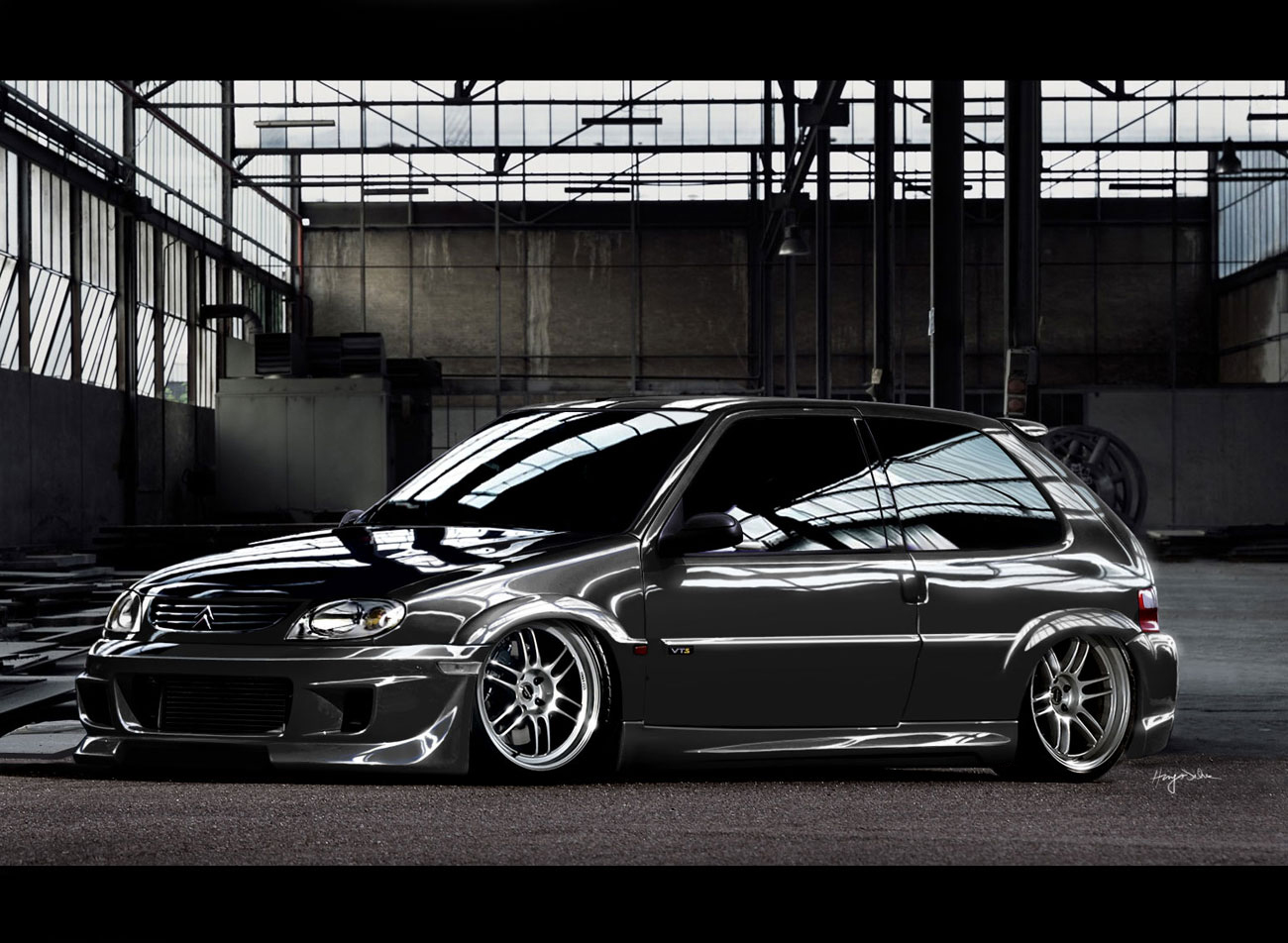 The Citroën Saxo is a supermini produced by the French manufacturer Citroën (PSA) from 1996 to 2003. It was also sold in Japan as the Citroën Chanson. It shares many engine and body parts with the Peugeot 106 (which itself was a development of the Citroën AX), the major difference being interiors and body panels. It was replaced by the Citroën C2 in the autumn of 2003. All engines were from the PSA TU engine series that powered the Peugeot 205 from 1988 and the Citroën AX, and had their roots before that with the OHC PSA X engine various other PSA cars used, such as the Citroën Visa, Peugeot 104 and early Peugeot 205. The range included five petrol engines and one diesel engine, all naturally aspirated. Although the power outputs seem low in modern terms, even the range-topping VTS had a kerb weight of just 965 kg (2,127 lb), giving all models quite a 'nippy' feel around town. The 1.0 was quite underpowered, the 1.1 was much better, since it was nearly 200 cc larger, and had roughly 30% more torque. There were 3 sport models of the Saxo: The Westcoast, later replaced by the Furio which featured a 1.4I 8V 55 kW (75PS/75BHP) engine with a top speed of 175 km/h (109 mph), and a 0-62.5 mph (0–100 km/h) time of 11.2 seconds. The VTR MK1 (1997–1999) featured a 1.6I 8V 66 kW (90PS/89BHP) engine with a top speed of 187 km/h (116 mph) and a 0-62.5 mph (0–100 km/h) time of 10.0 seconds. The VTR MK2 (1999–2003) featured a 1.6I 8V 72 kW (98PS/97BHP) engine with a top speed of 193 km/h (120 mph) and a 0-62.5 mph (0–100 km/h) time of 9.4 seconds. The VTS 16V featured a 1.6I 88 kW (120PS/118BHP) engine with a top speed of 205 km/h (127 mph), and a 0-60 mph time of 7.8 seconds. The VTS MK1 (1997–1999) and MK2 (1999–2003) shared the same performance. These models included 247 mm (9.7 in) vented front brake discs, with the VTR and VTS also having rear brake discs (solid 247 mm (9.7 in) discs). Also, a different style of control arms and struts was used for the suspension. The VTS had a 22 mm (0.9 in) master brake cylinder, and the VTR and Westcoast/Furio had a 19 mm (0.7 in). The VTS had a 19 mm (0.7 in) front anti-roll bar and 22 mm (0.9 in) rear anti-roll bar, while the VTR and Westcoast/Furio had a 19 mm (0.7 in) front and 21 mm (0.8 in) or sometimes 19 mm (0.7 in) rear anti-roll bar.
 In addition, all the sports models featured a different bodykit to the other models, commonly known as the "VT" bodykit. In 1997 the Saxo's 3 Speed Automatic Gearbox was combined with the 1.6i 8V 88 kW (90PS/89BHP) engine which was available on the Saxo SX and VSX. Then, in late 1997, the 1.6i automatic was replaced with a 1.4i 55 kW (75PS/74BHP) engine. The 1.6i was more powerful with a top speed of 176 km/h (109MPH) compared with the 1.4's top speed of 103 mph (166 km/h). Citroën carried on using the 1.4i engine on the Facelift Saxo Automatic in 1999. Due to the C3 having a 1.4i Automatic Gear Box the Saxo Automatic came to an end in March 2002, whilst the manual models were still sold right up to the end of 2003.
 The equipment list was generally sparse, with budget models having drivers air bag, seat belt pre-tensioners, cassette player, heated rear screen and tinted windows, and early mk1's with keypad immobilisers and a clock in place of a tachometer and 3 stud wheels, much like the AX. Further up the list sunroofs, PAS, Electric windows, ultrasonic alarm, passenger airbag, CD player, tachometer, front fog lights, bodykits, colour coded mirror caps and alloy wheels were added, to name a few. The 1.6L VTR and VTS Saxo's were the best equipped, with both gaining rear disc brakes as opposed to drum brakes, and ABS as an optional extra on the VTR and standard on the VTS. Few special models were released throughout the Saxo's life, most notably the "Open Scandal", a Saxo with a full length sliding canvas roof. Other special editions added certain extra's to the lower end model, such as sunroofs or PAS. Notable models are the Westcoast up to 1999 and the Furio to 2003, as they incorporated the standard Saxo bodykit found on the VTR and VTS with a more insurance friendly 1.4L engine. Air-conditioning was never an option on right-hand-drive Saxo's because the blower motor was mounted in the bulk-head on the drivers side. As a result, there was insufficient space available to accommodate the evaporator, except by first ducting the air flow to the passenger side and then at the expense of the glove-box. Although an after-market kit was available that did exactly this, the resultant pressure loss made the system noisy and ineffective. The blower motor could also not be easily relocated, since the windscreen wiper motor was mounted in the passenger side space. As with many other small cars of the time, the standard stereo system included 5.25" drivers mounted low in the front doors and 4" drivers mounted in the rear quarter panels. This set-up could be easily improved upon by mounting separate tweeters in the A-panel trims, similar to many VW models of the time. The very thin door cards and metalwork did however leave the system very 'thin' sounding, with very poor output in the upper-bass ranges. The Saxo received a style makeover at the start of the year 2000, commonly branded as a MK2, with the major differences being more modern styled headlights, bonnets and grilles to replace the square style on the MK1 and Multipoint injection replacing the single point on the 1.1L engines. PAS became standard on all but the very basic models. More subtle changes were alterations to the rear lights (the indicator sections are more "white") and the engine control unit moved from a single plug to 3 plugs. The old 3 stud wheel layout was also dropped. There was also a minor facelift during the MK1 phase of the cars production in line with the then current releases by Citroen, moving towards a rounder look. By 2003, some buyers were more attracted to the spacious and practical five-door C3. However, the 1.6 VTR and VTS models remained popular. The Saxo finally finished production in late 2003 when the three-door C2 was launched. Its twin, the Peugeot 106, also ceased production at this time. By the end of the Saxo's production life its design was 7 years old and despite this few other mini-cars were as enjoyable to drive. It also suffered poor performances along with its twin, the 106 in a 2000 EuroNCAP test, but then again so did more "respectable" cars of the same generation, such as the Polo.
 Mazda 2 Concept
 Elegant Mazda 2
 Mazda 2 Show Up
 Luxury Mazda 2
 Glory Blue Mazda 2
 Mazda 2 Hatchback
 Mazda 2 On the Parking Area
 Mazda 2 Elegant Interior
 Mazda 2 Advance Interior
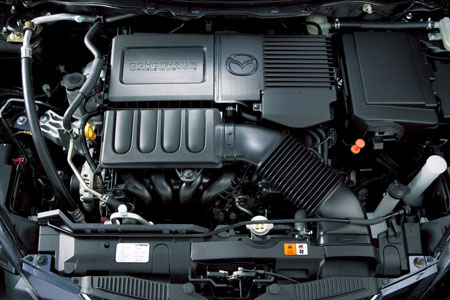 Mazda 2 Engine Detail
 Exotic Audi TT Without Top Cover
 Impressive Audi TT
 Elegant Audi TT
 Elegant Gray Audi TT Without Top Cover
 Audi TT Unique Design With Names Extreme Cars
 Sporty Audi TT
 Red Audi TT
 Luxury Interior of Audi TT
 Luxury Bugatti Veyron Roadster with white color
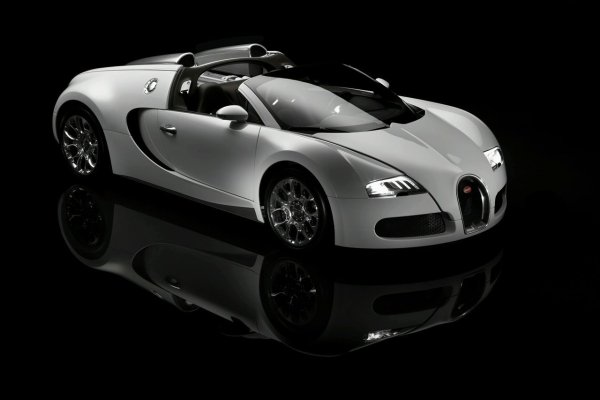 Elegant silver of Bugatti Veyron Roadster
 Luxury Bugatti Veyron Roadster
 Luxury interior of Bugatti Veyron Roadster
 Elegant Bugatti Veyron Roadster with silver color
 Exotic Bugatti Veyron Roadster
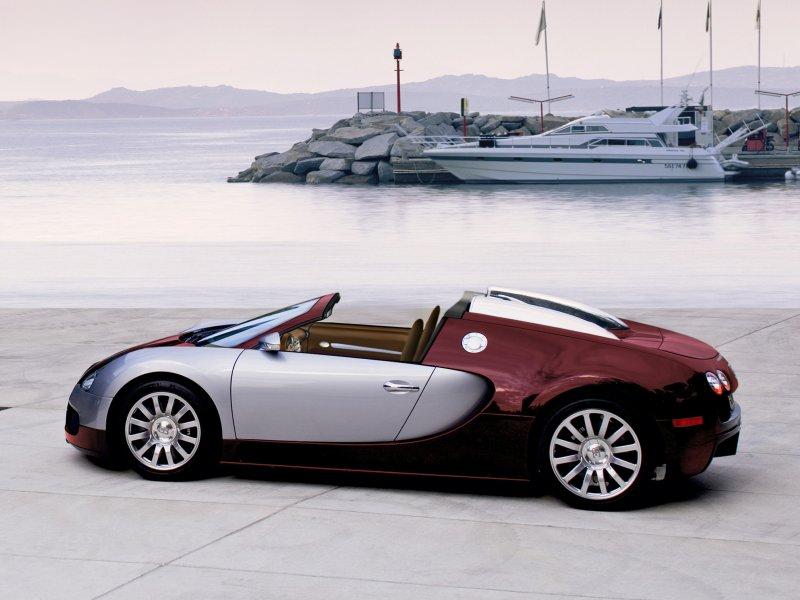 Unique Bugatti Veyron Roadster with red and silver color combination
 Amazing Bugatti Veyron Roadster
