Holden Commodore

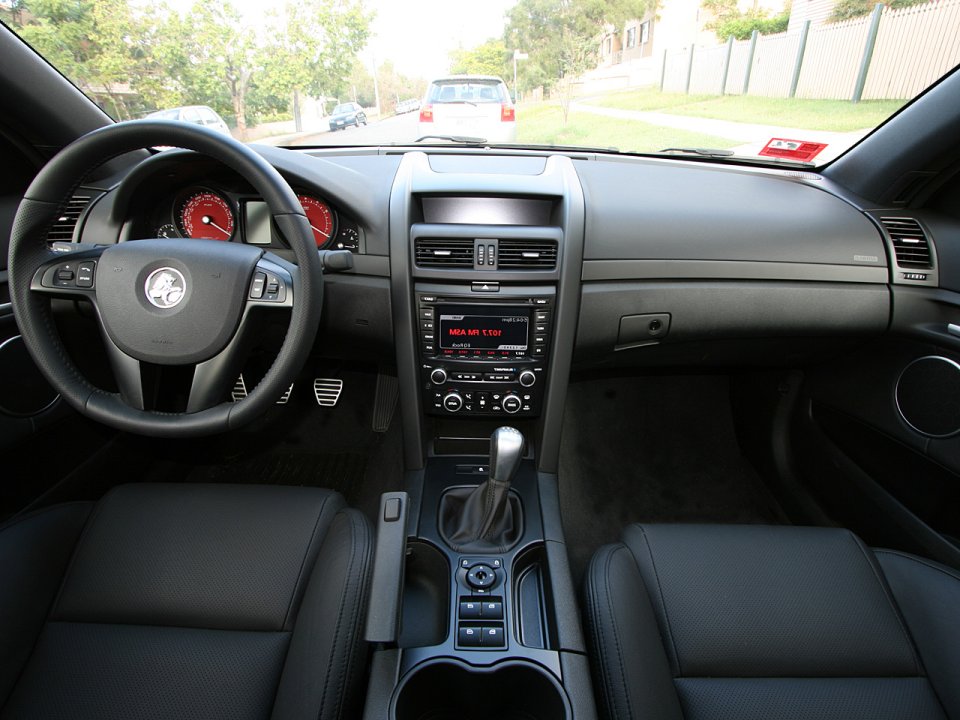
The Holden Commodore is an automobile manufactured since 1978 by the Holden subsidiary of General Motors (GM) in Australia, and, formerly, in New Zealand. In the mid-1970s, Holden established proposals to replace the long-serving Kingswood nameplate with a smaller, Opel-based model. Opel continued to provide the basis for future generations until the launch of the fourth generation in 2006, which deployed an Australian developed platform. Initially introduced as a single sedan body style, the range expanded in 1979 to include a station wagon, with utility and long-wheelbase Statesman/Caprice derivatives following in 1990. The foundations for a revived Monaro coupé, four-door Crewman utility, and all-wheel drive Adventra crossover were provided by the now discontinued third generation architecture. From 1984, Holden began branding the flagship Commodore model as Holden Calais; the Holden Berlina and Holden Ute followed in 1988 and 2000, respectively. These were known previously as the Commodore Berlina and Commodore utility. Rivalry has come predominantly from the Ford Falcon—also locally-built. Prior to the 1988 onwards second generation Commodore, the Holden was positioned a full class below the full-size Falcon. To a lesser degree, competition has also come from Toyota, and previously Mitsubishi Motors, with their mid-size cars. Between 1989 and 1997, Toyota retailed a Toyota Lexcen version of the second generation Commodore. With the introduction of generation three in 1997, Holden broadened the Commodore's export plans. Since the late-1990s, Commodores have been sent abroad as the Chevrolet Lumina and Chevrolet Omega, with Vauxhall VXR8 sales beginning in 2007. Versions have also been previously exported in the mid-1990s to Southeast Asia as the Opel Calais, and to North America between 2007 and 2009 as the Pontiac G8.

Introduced in October 1978, the Holden VB Commodore development covered a period with the effects of the 1973 oil crisis still being felt. Hence, when Holden decided to replace the successful full-size HZ Kingswood with a new model line, they designed the new car to be smaller and more fuel efficient. Originally, Holden looked at developing a new WA Kingswood, however, this project was later dismissed. With no replacement in development, Holden looked towards Opel for providing the foundations of the VB, basing it loosely on the four-cylinder Rekord E bodyshell with the front grafted on from the Opel Senator A. This change was necessitated to accommodate the larger Holden six- and eight-cylinder engines. Holden also adopted the name "Commodore" from Opel, which had been using the name since 1967. Opel went on to use Holden’s Rekord-Senator hybrid as a foundation for its new generation Commodore C, slotting in between the two donor models. The Holden VN Commodore of 1988 and subsequent second generation models took their bodywork from the larger Opel Senator B and new Opel Omega A. However, this time, the floor plan was widened and stretched; now matching the rival Ford Falcon for size. Continuing financial woes at Holden meant the wider VN body was underpinned by narrow, carry-over VL chassis components in a bid to save development costs. In the VN and succeeding models, the Commodore Berlina became known simply as the Berlina. The range expanded in 1990 to include a utility variant, given the model designation VG. This was built on a longer-wheelbase platform that it shared with the station wagon and luxury VQ Statesman limousine released earlier in the year. During this time, the rival Ford EA Falcon was plagued with initial quality issues which tarnished its reputation. Buyers embraced the VN Commodore, helping Holden to recover and post an operating profit of A$157.3 million for 1989. The team at Wheels magazine awarded the VN Car of the Year in 1988: the second Commodore model to receive this award.

With the VT Commodore of 1997, Holden looked again to Opel in Germany for a donor platform. The proposal was to take the Opel Omega B and broaden the vehicle’s width and mechanical setup for local conditions. In the early days, Holden considered adopting the Omega as is, save for the engines and transmissions, and even investigated reskinning the existing VR/VS architecture. Later on, the VT bodywork spawned a new generation of Statesman and Caprice limousines, and even went as far as resurrecting the iconic Monaro coupé from the 1960s and 1970s. Launched in 2006 after GM's 2003 abandonment of their last European rear-drive sedan, the Opel Omega, the VE is the first Commodore model designed entirely in Australia, as opposed to being based on an adapted Opel-sourced platform. Given this and high public expectations of quality, the budget in developing the car reportedly exceeded A$1 billion. Underpinned by the new GM Zeta platform, the VE features more sophisticated independent suspension all round and near-even 50:50 weight distribution, leading to improved handling. Engines and transmissions are largely carried over from the previous VZ model. However, a new six-speed GM 6L80-E automatic transmission was introduced for V8 variants, replacing the old four-speed automatic now relegated to base models. The design of this new model included innovative features to help minimise export costs, such as a symmetrical centre console that houses a flush-fitting hand brake lever to facilitate its conversion to left-hand drive. Internationally, the Commodore is again badge engineered as the Chevrolet Lumina and Chevrolet Omega, along with its new export market in the United States as the Pontiac G8 (discontinued as of 2010 along with the Pontiac brand).

Jeep Liberty 2011 Charcoal

Luxury Jeep Liberty 2011 Charcoal

Active Jeep Liberty 2011 Charcoal

Elegant Jeep Liberty 2011 Charcoal

Strong Jeep Liberty 2011 Charcoal In Red Color

Jeep Liberty 2011 Charcoal Interior View

Black Awesome Jeep Liberty 2011 Charcoal

Jeep Liberty 2011 Charcoal Hatchback

Blue Jeep Liberty 2011 Charcoal

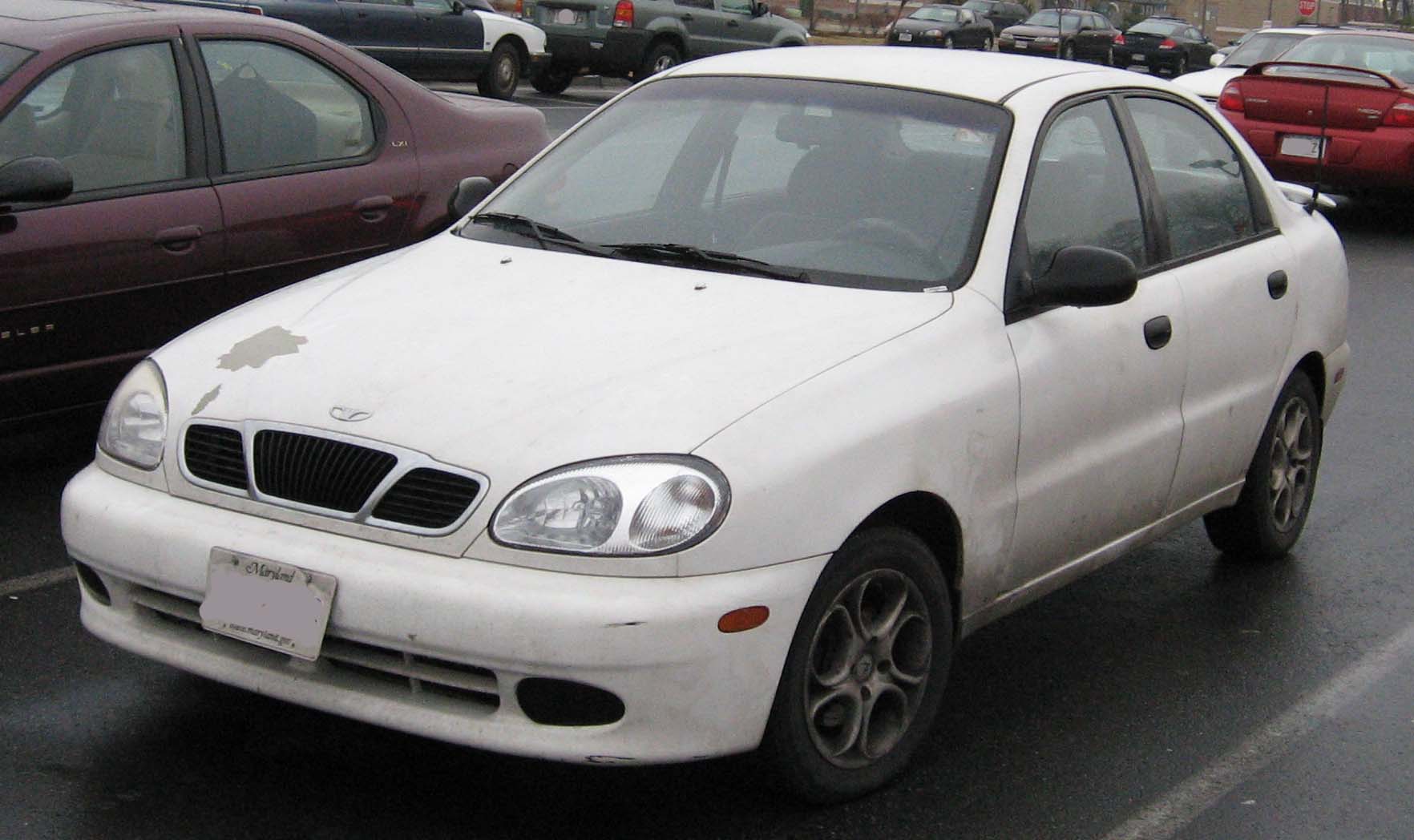
Daewoo Lanos

The Daewoo Lanos was a subcompact car manufactured by the Korean automaker Daewoo Motor from 1997 to 2002, and from 1997 to 2008 made under a license agreement by the Fabryka Samochodów Osobowych (FSO) in Poland, marketed as FSO Lanos, and assembled in Ukraine in modified versions known as Daewoo Sens and Chevrolet Lanos. The Chevrolet Lanos is also manufactured and sold in Egypt, from November 2008 to present (2011). For a brief period, it was also assembled by TagAZ in Russia, marketed as Doninvest Assol. The Lanos was designed by Giorgetto Giugiaro and featured three body styles - 3-door and 5-door hatchbacks and a 4-door sedan. Lanos was designed to replace Daewoo Nexia in the Daewoo lineup and was itself replaced by Daewoo Kalos.
In 1992, Daewoo dissolved its joint-venture with General Motors, and simultaneously a decision was made to independently develop replacements for the contemporary Daewoo Motors products, based on older General Motors models. The Lanos development programme was formally started in autumn 1993, with the goal to create a car to replace Daewoo Nexia as Daewoo's small family car.


ANGEL EYES daewoo lanos

The project began with a comparative study of competing models from 20 different manufacturers, with Toyota Tercel, Opel Astra and Volkswagen Golf identified as most competitive. Four design studios were commissioned to deliver clay models preseting their ideas for the new model's styling. Giorgetto Giugiaro's design was chosen, and Italdesign was commissioned to develop the car's final outside and interior styling. The technical side of the project was conducted simultaneously by Daewoo's development centre Korea as well as suppliers and contractors, who were involved in developing particular components. This included AC Rochester (engine componentry), Delco Chassis Division (brakes, including ABS), GM Powertrain (automatic transmission), Italdesign (body, structural analysis, electrics, prototype construction), PARS Passive Rückhaltesysteme GmbH (airbags) and Porsche (vehicle concept — research, structural analysis, suspension and brake components, and experimental production supervision). The cars were equipped with GM Family 1 D-TEC I4 engines ranging from 1.5 L (1549 cc) SOHC to 1.6 L (1598 cc) DOHC. In the UK and many countries of Europe (like Italy, France or Austria) there are also E-TEC models 1.4 (1349 cc) and 1.6 (1598 cc). The suspension is built upon that of a Daewoo Nexia, as used in Vauxhall/Opel Astra Mk2 GTE. The four models available were S, SE, SE Plus, SX, and later, the SPORT model. The S was the base model and did not include many standard features (like a CD player or power windows). The SE was just a small step up from the S base model. However, the SX model usually included a CD, radio, and cassette player along with power windows, a power side mirror, and fog lights. A few select SX models even came with a sun-roof though not many did. In the Lanos's later years, the SE and SX models were dropped and replaced with a new trim line called the SPORT (2001–2002). The SPORT included several features similar to the SX, but also included red/black leather seats, and a metallic silver dash trim. Also, the SPORT model had window controls located on the doors rather than the center console (like in the previous trim lines).

CKD kits were supplied to the Polish car factory FSO, the Ukrainian ZAZ and Russian TagAZ (where it was briefly sold as the Doninvest Assol). From 2002, ZAZ equipped some of the kits with a domestic MeMZ-307 engine and sold this version under the Daewoo Sens name; this practice continues with the start of full-scale production of model T150. In 2004, ZAZ adopted the Lanos chassis for full-scale production and installed new welding and painting lines. The updated version is called the ZAZ Lanos (internal model T150). The engines are still supplied by GM Daewoo, although ZAZ is currently seeking a way to acquire modern engine technology. ZAZ is selling the Lanos as ZAZ Sens. The "Sens" name is used on the pre-facelift models. Since January 2005, the Lanos produced in Poland started to be sold under the brand name of FSO. In 2005, General Motors contracted with ZAZ to provide Ukrainian-assembled Lanos models for the Russian market, to be imported duty-free, thanks to an international agreement, and sold through the GM dealer network. Sales of the Chevrolet Lanos sedan commenced in Russia in November 2005. The Chevrolet brand was utilized to compete effectively with the Renault Logan. In 2006, a panel van variant of the ZAZ Lanos was introduced. The 5-door hatchback version was available with all the options and manual transmission; it was also called Daewoo "Juliet" in Egypt. Near the end of year 2000 the Lanos was introduced with a different rear end design and a face lifted front. It was called "Lanos II" in this particular market. A SE version came with all the options plus the manual transmission. The automatic transmission version was stopped shortly after the introduction of the "Lanos II". In November 2008, GM Egypt started selling Chevrolet Lanos. The car is built in the company's factory in 6 October district and it is basically a Daewoo Lanos with a Chevrolet emblem. The Lanos was finally phased out after the 2002 model year, superseded worldwide by the Daewoo Kalos. Daewoo ceased operations in North America. After GM took over Daewoo to become GMDAT, Chevrolet began importing the Daewoo Kalos, rebadged as the Aveo, to North America beginning with MY2004. The 2001 and 2002 models follow a recent trend among cars intended to be sold in many markets, in that their rear lamps are asymmetric, with the fog lamp and reverse lamp occupying complementary spots on the driver's side and passenger side respectively; consequently, the rear lamps differ between left- and right-hand drive examples.

Subaru Tribeca

The Subaru Tribeca is a mid-size crossover SUV sold by Japanese automaker Subaru. The Tribeca was first sold as a 2006 model, with five-seat and seven-seat trims. Built on the Subaru Legacy platform, the Tribeca was inspired by the B9X concept car and has now evolved into its second styling generation. The name Tribeca derives from the TriBeCa neighborhood of New York City. The Tribeca is the only vehicle in this class that comes equipped with AWD as standard equipment, with a FWD or rear wheel drive platform not available. The Tribeca is not sold in Japan, and it was introduced in Australia and New Zealand in late 2006, with an introduction to Germany in 2007. This is mainly due to the similar Subaru Exiga sold in Japan. As a result, the Subaru Tribeca is the only 2000s-introduced vehicle in the current North American Subaru lineup. The Tribeca is available in North America, Europe, Chile, Argentina, Peru, China, Australia and parts of southeast Asia. The B9 Tribeca was featured a new Subaru design language of a triangular grille and a rounded bodyshape. Subaru also used the grille styling on the Impreza, and the JDM Subaru R1/R2 kei car products with a similar reaction. Subaru has since abandoned this styling feature for future models beginning with the 2006 model year.The grille design was not conceived by designer Andreas Zapatinas, rather by Fuore Design, an independent design consulting firm based in Spain, hired by Subaru before Zapatinas involvement. Andreas Zapatinas and his team were responsible for the design of the interior, and the dashboard in particular. According to an LA Times article, the grille design was "meant to convey parent-company Fuji Heavy Industries' glorious history in aviation." The Tribeca was slightly reworked for 2007. The updated model, debuting at the Chicago Auto Show, includes a revised grille, and revised struts, stabilizer bars, and spring rates. Inside, XM Satellite Radio and iPod connectors are pre-wired, while a backup camera and parking assist system are optional for the navigation system. A US$1300 Special Edition package includes a mesh grille, XM radio, and special wheels.

The 2008 model was introduced at the New York International Auto Show in April 2007. It received a facelift, as well as a larger EZ36 3.6 L H6 256 hp (191 kW) engine, and Subaru claimed 10% better fuel economy while using regular fuel (the 2006 and 2007 use premium) "B9" was dropped from the model name, leaving it just Subaru Tribeca. The back of the vehicle was also mildly redesigned. The tail lamps are more rounded and the "cutout" on the hatch above the bumper has been omitted. The rearmost side window was reshaped. Interior styling is unchanged, but the second row seats have been redesigned for more room and easier access in the third row. The refreshed Tribeca bears much resemblance to concept mock-ups of the unreleased Saab 9-6X, as well as the Chrysler Pacifica. The vehicle is offered with two trim levels; the standard Tribeca and the Limited, which adds a moonroof, leather interior, roof rails for enhanced cargo carrying and a premium audio system with 6-disc in-dash CD changer. The interior colors are somewhat limited to either dark gray cloth or a choice of dark gray or light beige leather interior. The Limited trim level includes an in-dash multifunction screen that displays navigation system information, audio system information, trip computer functions, outside temperatures, maintenance intervals, controls for various vehicle settings, calendar, calculator and memo-taking functions. Video input from rear-seat DVD entertainment system is available with third row seating only, and can only be displayed on the instrument panel center screen if the vehicles transmission is in Park. The cargo volume is 37.6 cu ft (1.06 m3) with the second row seats raised and 74.4 cu ft (2.11 m3) with rear seats lowered. Seating configuration remains at standard second row seats or optional third row seats. The vehicle is equipped with six airbags; two for the front passengers, two side impact airbags that deploy from the outer edge of the front seats and side curtain airbags that drop in front of the front and second row side doors. Two stereo packages are offered, starting with a 100W 6 speaker system with a single-disc in-dash CD player with MP3 compatibility, or a premium stereo with 160W, 9 speakers with subwoofer and a 6-disc in-dash CD changer, also MP3 compatible. Both stereos have auxiliary audio jacks for MP3 players and steering wheel-mounted audio controls.

Subaru chose to use an aluminum alloy boxer engine in the Tribeca, as well as their other products, to simplify the powertrain implementation of all-wheel drive, in order to reduce powertrain weight, and because of the natural smoothness of the engine design. According to Subaru, since the engine sits in-line or longitudinal with the transmission, instead of being offset or transverse as can be commonly found by other FWD and AWD vehicles, body roll is minimized. The weight of the engine and automatic transmission are balanced instead of being offset. The power delivery is also direct from the transmission to the front wheels, and to the rear wheels through a rear differential, which is limited slip on some models. The front differential is integrated into the Subaru transmission. Other AWD vehicles were first engineered as either front or rear wheel drive, but were modified with an additional, external transfer case and asymmetrical drive shafts to power the additional wheels. The boxer engine also affords a low center of gravity, and a balanced chassis because the engine sits low in the engine bay and close to the ground, as opposed to other vehicles, allowing the vehicle to stay more stable than some vehicles in moderate to high speed manoeuvres. Other manufacturers counteract the offset weight by evenly distributing their powertrains' weight. The boxer design also provides near-perfect vibration mitigation due to the fact that the movement of each piston is exactly countered by the corresponding piston in the opposing cylinder bank, eliminating the need for a harmonic balancer attached to the front of the engine at the crankshaft, and that the movement of the pistons is on a horizontal plane. The only vibration caused by the boxer engine is secondary caused by the cylinders being slightly offset on opposing banks. This vibration, however, is minimal and is all but eliminated when the engine is mounted in the engine bay. Torque steer is also reduced with this type of power train layout. This is achieved by having the front driveshafts being of equal weight and length, and extend from the transmission to the front wheels at almost perpendicular from the transmission. The Tribeca won best interior of the year by Ward's Auto, a benchmark agent similar to JD Power, but more subjective. Also, it was considered Most Innovative Concept at the 2004 Detroit Auto Show. The Tribeca scored well on Insurance Institute for Highway Safety crash tests. It earned a "Top Safety Pick" ranking.

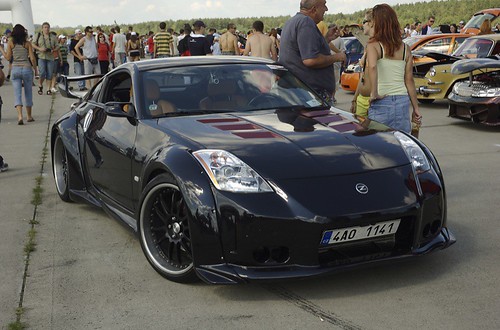
Nissan 350z Modified

Impressive Nissan 350z Modified Looks Elegant

Creative Nissan 350z Modified In Red Colors

Amazing Nissan 350z Modified

Sporty Nissan 350z Modified


350z LED headlights daytona color match (old version)

Original Nissan 350z Modified

Awesome Nissan 350z Modified

Nissan 350z Modified Painting

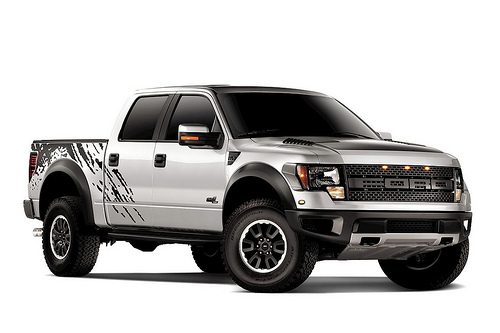
Ford Raptor Blacked Out

Based upon the hugely popular F-150 range, the new SVT Raptor version features a significantly reworked suspension set-up to ensure a perfect blend of on-road dynamics and high-speed sand-racing ability.

A key difference between the Raptor and ‘stock’ F-150s - beyond the oversized grille and orange hue – is its aggressive stance, especially considering it’s 177mm wider.

Interior design is outlandish yet borders on right side of tasteful. The steering wheel is wrapped in black leather and features a molten-orange leather strip that serves as a centring sight line.

Active Ford Raptor Blacked Out


Impressive Ford Raptor Blacked Out

Ford Raptor Blacked Out Show Up

Boosting traction are a radical set of BF Goodrich All-Terrain TA/KO 315/70 tyres running on 17-inch mags, bolstered by a rear differential lock which can be engaged on the move. The range of stability systems are tailored to an off-road bias, ensuring optimal stability during dune jumping manoeuvres; ABS though, stays engaged at all times, enabling the hill descent control to function. Powering the heavily styled Raptor on display at SEMA is a 235kW 5.4l Triton V8 which also brings 529Nm to the game. The range is expected to be bolstered by a 300kW 6.2l V8 by the end of 2009, though the large capacity V8 engine – codenamed Boss by Ford insiders – had the skids put on its development cycle at the height of the oil price spike midway through 2008.

Ford Raptor Blacked Out With GPS

"With the F-150 SVT Raptor, we changed the axle, the whole front suspension is different – new upper A arm, new lower A arm, new tie rod, new half-shaft joints,” said Jamal Hameedi, Ford SVT chief engineer. “It’s well beyond what SVT has ever done with one of our vehicles.” In addition to a beefed up suspension, the F-150 SVT Raptor also boasts unique internal bypass Fox Racing Shox, the only internal bypass shocks on a street truck. It endows the Raptor with 292mm worth of wheel travel op front and 330m at the rear. A position sensitive dampening internal bypass feature allows the shock to become significantly stiffer as it travels, preventing the truck from bottoming out.

Ford Raptor Blacked Out Seats View

Cool Ford Raptor Blacked Out In Black Color

Strong Ford Raptor Blacked Out

Buick Lesabre

The Buick LeSabre is a full-size car made by the Buick division of General Motors from 1959-2005. For many years, the LeSabre was considered the entry level full-size Buick, carrying the lowest base price in the Buick lineup. Prior to 1959, that position had been held by the full-size Buick Special model; in 1959 the LeSabre replaced the Special, a nameplate that was reintroduced in 1961 for Buick's line of compact cars. The name originated with the 1951 Buick Le Sabre show car designed by Harley Earl.LeSabre and all other 1959 Buicks not only got new names, but all-new styling as well, adopting the new GM B- and C-body used on all of the corporation's full-sized cars (the larger C-body used in the Electra as well as the Oldsmobile 98 and all Cadillacs was basically a stretched out B-body rather than a distinct body and chassis for 1959–60). Wheelbases increased by one inch on all models. The new styling included slanted headlights in front along with a chromey square grille somewhat similar to the 1958 Buick and "Delta-wing" fins back along with round taillights.The 1960 LeSabre received a minor facelift with a concave grille and horizontal headlights centered by Buick's then-new "Tri-Shield" logo, which is still in use today. Reintroduced to Electras and other Buicks for 1960 were the chrome "Ventiport" portholes first introduced in 1949 and last seen in 1957. LeSabre and Invicta models had three portholes while Electras and Electra 225s were "four-holers".LeSabre and all other full-sized Buicks (joined by the compact Special this year) were completely restyled for 1961 featuring finless rear ends, more restrained use of chrome and boxier sheetmetal. Wheelbases remained at 123 inches (3,100 mm) but the new cars were slightly downsized in length and width, and rode on a new X-frame chassis which included a conventional rear axle and driveshaft replacing the decades-old torque tube design.The 1962 Buick LeSabre was only moderately changed from the previous year with bodies taking on a few extra inches to give them a longer look along with new grilles and taillights. Two-door hardtop coupes received a new convertible-like roofline complete with simulated bows.The 1963 LeSabre received a major facelift with even boxier body contours than 1961-62 models and revised rooflines on four-door hardtop sedans.Minor facelifting with new grille and horizontal taillights replacing the 1963's vertical units highlighted the 1964 LeSabre.

LeSabre and other full-sized Buicks were completely restyled for the 1965 model year, featuring more rounded bodylines and Coke-bottle profiles with semi-fastback rooflines on two-door hardtop coupes. Wheelbases remained at 123 inches (3,100 mm), but a new perimeter frame shared with other GM B-body cars replaced the "X" frame used since 1961. Body styles were unchanged from 1964 except for the station wagon, which was dropped in favor of the stretched intermediate Special-based Buick Sport Wagon which featured a raised rear roof and glass skylight over the back seat similar to the Oldsmobile Vista Cruiser. .New grilles and four-segmented taillights highlighted the face-lifted 1966 LeSabre models. Also new was a revised instrument panel with a horizontal sweep speedometer replacing the round pod instruments and new interior door handles. Both base and Custom level series were continued. New standard safety features included a padded instrument panel, outside driver-side rear view mirror and backup lights.Somewhat more rounded sheet metal and a swoopier fastback roofline for the two-door hardtop highlighted the 1967 LeSabre but chassis and inner body were unchanged along with drivetrains. Both base and Custom-level LeSabres were continued.The 1968 LeSabre received a minor facelift including new grilles and taillights along with concealed windshield wipers. Inside was a revised instrument panel with square speedometer surrounded by other instruments with minor trim revisions for both base and Custom models.The 1969 LeSabre received new sheetmetal with more squared off styling than the 1965-68 models including a formal roofline on coupes replacing the semi-fastback of previous years. Though the 1969 model was extensively restyled with new sheetmetal, the basic 1965 chassis and inner body structure were retained, along with the roofline of the four-door pillared sedans though vent windows were dropped on all models. Wheelbase remained at 123 inches (3,100 mm). Interiors were mildly revised with minor changes to the instrument panel including the movement of the heating/air conditioning controls to the left of the steering wheel, which was new this year. Headrests, previously optional, were now standard equipment due to a federal safety mandate. The 1969 LeSabre and other Buicks also received a new steering column mounted ignition switch (relocated from the instrument panel) that also locked the steering wheel when the transmission was in Park. The ignition/locking steering column appeared on all 1969 General Motors cars one year ahead of the federal mandate requiring all cars to be so equipped.Like the other GM divisions, Buick completely restyled its B- and C-body cars for 1971. The full-size cars emerged larger and heavier than before and also ever after. The styling featured curved bodysides, long hoods and wide expanses of glass, similar to that of Chrysler Corporation's 1969 full-sized cars, but with a lower beltline than the Chrysler products. Semi-fastback rooflines were utilized on two-door hardtop coupes and convertibles had a new top design to permit a full-width rear seat.

The 1977 Buick LeSabre and other GM B-body full-sized cars were considerably smaller and lighter than their predecessors to the tune of losing 700-800 pounds of weight and overall length of 10 to 15 inches (380 mm). The full-sized cars were the beginning of a "corporate-wide" downsizing of vehicles in order to improve fuel economy ratings following the 1973-74 energy crisis that would filter down to intermediates in 1978, personal-luxury cars in 1979 and compacts in 1980 with subsequent downsizings of each line of vehicles scheduled in subsequent years.The 1986 LeSabre was introduced on the new front wheel drive H platform, after departing from rear wheel drive on the GM B platform. Joining the LeSabre on the H-body included the Oldsmobile Delta 88 and the 1987 Pontiac Bonneville, which returned to full-size after a short-lived run as a mid-size on the G platform. One of the most striking features of the LeSabre version of the H body was the "clamshell" hood that opened up in the same fashion as that of a Corvette.For the 1992 model year, the LeSabre was redesigned along the same lines as the previous year's Park Avenue. The LeSabre was available only as a four-door sedan from this point forward until the car was discontinued in 2005. The headlights were streamlined with a separated amber turn signal strip wrapping around the lower front fascia. The rear fascia featured a wider trunk mouth and lower lift over height to ease loading baggage while the front was smoothed with simplified chrome molding and absent bumperettes. The LeSabre also featured GM's plastic body technologies, with high-stress plastic replacing traditional steel in the front fenders.The 2000 LeSabre was introduced in 1999 as the Buick LeSabre 2000, using a re-engineered H platform based on the G platform previously used for the Buick Riviera. Following the end of the 2000 model year, the automobile reverted to the Buick LeSabre nameplate.
Related Posts Plugin for WordPress, Blogger...